
Macaranga denticulata
Macaranga denticulata
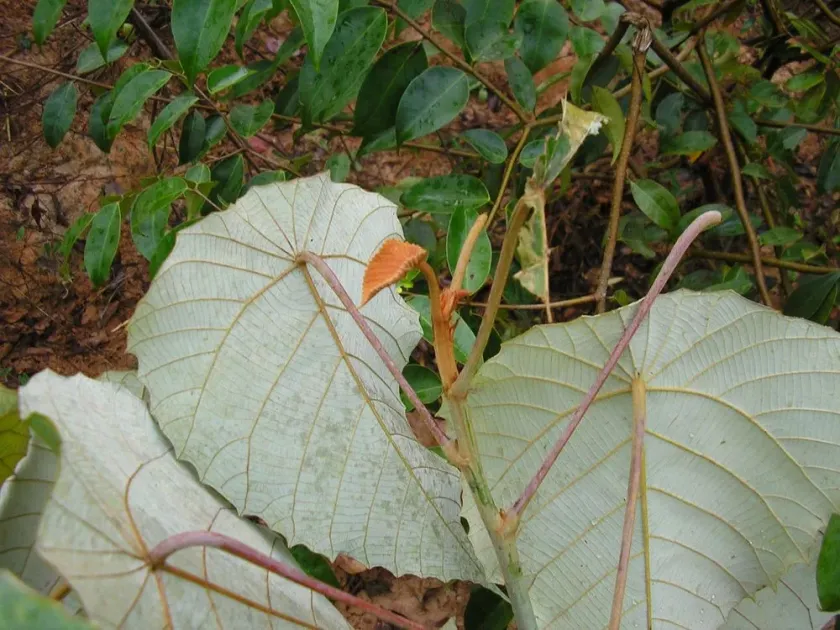
Description
Growing requirements
Macaranga denticulata is a fast-growing, pioneer tree species belonging to the Euphorbiaceae family, widely distributed across the tropical landscapes of Asia, from India to Southern China.
This species thrives in high-temperature, high-humidity environments and is commonly found in cleared land or forest gaps where sunlight is abundant and soil is well-drained.
Agronomically, it requires significant moisture throughout the growing season but cannot tolerate waterlogged soils, which may cause root rot and inhibit optimal growth rates.
It prefers soils with neutral to slightly acidic pH levels and can adapt to various soil types provided they are nutrient-rich enough to support its rapid biomass accumulation.
Propagation is primarily performed through seeds, which require specific conditions of heat and moisture to germinate effectively, necessitating managed nursery environments for initial development.
Yield
The primary economic output of Macaranga denticulata is its light, soft wood, which is extensively utilized in the paper and pulp industry for producing pulpwood and fiberboards.
Due to its rapid growth, it serves as an excellent resource for reforestation projects, helping to restore vegetation cover on degraded or abandoned agricultural sites.
The timber is frequently used in local construction for light framing, packaging materials, and the manufacture of various household items that do not require high structural load-bearing capacity.
In agroforestry systems, it is valued for its ability to protect topsoil from erosion and its role in creating a cooler microclimate for intercropping or mixed-use agriculture.
Beyond traditional timber usage, ongoing research is investigating the medicinal properties of its leaves and extracts, reflecting its potential in biochemical and cosmetic industries.
Main diseases and pests
The species faces several biological threats, including fungal pathogens that target both leaf tissue and stems, which often thrive in overcrowded or poorly ventilated plantation settings.
Insect pests, particularly leaf-feeding larvae, pose a recurring challenge by reducing photosynthetic capacity, which directly impacts the wood production cycle.
Effective management strategies involve regular monitoring of the plantations, early detection of pest outbreaks, and strict adherence to sanitary logging practices to curb the spread of infections.
Balanced plantation density is critical, as it prevents the buildup of humidity at the canopy level, which is a major factor in the prevention of various wood-rotting diseases.
Integrated pest management, combining physical barriers and biological controls, is the preferred approach to maintain the health and vigor of Macaranga denticulata stands.