
Macaranga conifera
Macaranga conifera
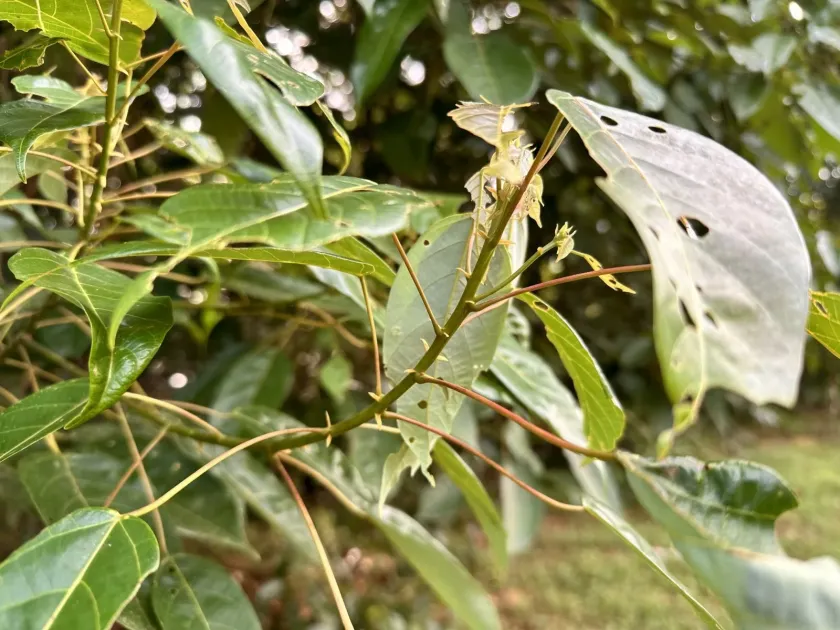
Description
Sowing dates
Propagation of Macaranga conifera is primarily achieved through seeds, which should be sown immediately after harvesting to ensure high viability.
Optimal germination occurs in nursery conditions using a light, well-draining substrate that mimics the moist environment of tropical secondary forests.
Seedlings are typically ready for transplanting when they reach a height of 30–40 centimeters, usually 3–4 months after the initial sowing.
When moving plants to the field, it is crucial to handle the root ball carefully to prevent shock and ensure steady establishment in the soil.
The planting density should be carefully calculated based on the intended purpose, whether it is for rapid reforestation or timber production.
Growing requirements
This species belongs to the Euphorbiaceae family and is native to the diverse ecosystems of Southeast Asia.
It thrives in tropical climates with temperatures ranging from +22°C to +32°C and requires high annual rainfall for optimal growth.
As a pioneer species, it demands full exposure to sunlight and is unsuitable for shaded environments or dense forest canopies.
Soil requirements include good drainage and moderate fertility, though the tree is remarkably capable of colonizing degraded or cleared lands.
Regular maintenance, including weed control around the base, is necessary during the first year of growth to ensure the plant gains dominance.
Yield
The industrial value of Macaranga conifera lies in its lightweight timber, which is favored for various manufacturing and construction applications.
The rapid growth rate allows for a quick turnaround in plantation management, often yielding usable timber within less than a decade.
Applications include the production of plywood, crates, internal furniture components, and various local artisanal woodcrafts.
Beyond timber, the tree provides significant ecological benefits by acting as a fast-growing cover crop that prevents soil erosion.
Total yield is maximized through systematic planting cycles and optimal forest management practices, ensuring long-term sustainability.
Main diseases and pests
Susceptibility to fungal pathogens is a primary concern, particularly in plantations with stagnant air circulation or waterlogged soil conditions.
Defoliating insects and various caterpillar species can cause significant stress to young trees by reducing their photosynthetic capacity.
Scale insects can infest stems and branches, leading to weakened growth and increased vulnerability to secondary infections.
Invasive grasses and fast-growing vines pose the biggest threat in the early stages, as they can quickly choke out young Macaranga seedlings.
- Root rot caused by stagnant moisture.
- Stem borer infestations.
- Competition from invasive weeds and climbers.
Harvesting
Harvesting techniques typically involve clear-cutting or selective harvesting based on the maturity of the trees and market demands.
The ideal harvest period is determined by stem diameter and tree height, usually timed around the 7–10 year mark for maximum biomass.
Operations are best scheduled during the dry season to minimize damage to the soil and simplify the transportation of heavy timber logs.
Post-harvest management involves clearing the site to facilitate natural regeneration or preparing it for the next planting cycle.
Efficiency in harvesting is increased by utilizing appropriate machinery that minimizes waste and preserves the surrounding ecosystem structure.