
Macaranga bancana
Macaranga bancana
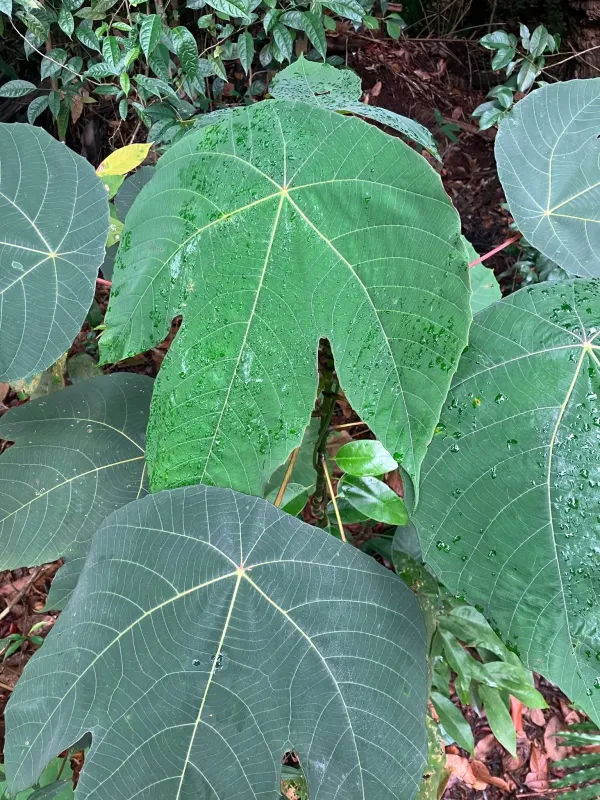
Description
Sowing dates
Macaranga bancana is a pioneer tree species known for its ability to rapidly colonize disturbed forest clearings. The seeds exhibit high germination rates when exposed to direct sunlight, which is a key factor in its successful establishment in reforestation projects.
The optimal time for sowing in nurseries coincides with the start of the rainy season to ensure constant soil moisture. Pre-treatment of seeds via scarification may be necessary to overcome dormancy and ensure uniform emergence of seedlings.
In natural habitats, seed dispersal is facilitated by local wildlife. For artificial cultivation, seeds should be sown in rows on prepared mineralized seedbeds to mimic the natural ecological niche required for growth.
Seedlings are typically transplanted to their permanent location after 4 to 6 months of nursery care, once the root system is sufficiently robust. Ensuring the seedlings are vigorous enough to compete with herbaceous ground cover is essential for long-term success.
Maintenance during the early stage involves periodic weeding around the base of the young trees. The rapid growth of this species allows it to establish a canopy closure within a few years, which naturally suppresses competing weed species.
Growing requirements
Macaranga bancana belongs to the Euphorbiaceae family and is native to the tropical regions of Southeast Asia. It is highly adapted to high-light environments and cannot thrive under a dense forest canopy.
The species prefers well-drained, fertile soils but displays significant tolerance for degraded or nutrient-poor substrates. Proper site selection focusing on exposure to sunlight is more important than specific soil quality parameters.
Optimal growth occurs in tropical climates with high annual rainfall and constant temperatures. Protection from extreme winds is recommended, as the rapidly growing wood can be susceptible to mechanical damage in early development stages.
Soil acidity should be kept within a mild range for best growth results. The plant is highly responsive to the presence of soil microbiota, which can be enhanced through the use of localized organic amendments during the planting phase.
Waterlogging is a significant stress factor for this species. Sites must possess excellent natural drainage to prevent the development of root diseases, as the species is highly sensitive to stagnant water during the monsoon season.
Yield
The primary yield from Macaranga bancana is its immense woody biomass, which is produced at a rapid rate compared to other tropical hardwoods. This makes it a sustainable resource for the pulp and paper industry.
The leaves and soft stems contribute significantly to the rapid accumulation of organic matter on the forest floor. In agroforestry systems, the high turnover of leaf litter is prized for improving the nutrient status of depleted soils.
The species begins to produce seeds at a relatively early age, usually within 3 to 5 years. This allows for continuous harvest of reproductive material for propagation without depleting the existing plantation base.
Seed production is prolific, providing a consistent supply for forestry nurseries. Proper harvesting schedules ensure that seed collection does not negatively impact the natural regeneration cycle of the stands.
By producing massive amounts of organic material, the species helps restore the soil structure, facilitating the later introduction of more demanding, late-successional tree species into the ecosystem.
Main diseases and pests
Macaranga bancana is generally robust against many common pests due to the specific chemical composition of its tissues. However, periodic outbreaks of leaf-eating insects can occur, necessitating regular monitoring of the plantations.
Fungal root rot is the most serious threat, especially if planting sites are poorly drained or if irrigation management is improper. This condition can lead to rapid mortality among young, nursery-grown saplings.
Invasive lianas and climbers are a constant threat in tropical forest management. They can entangle the young trees, limiting their light access and potentially causing physical damage to the leading shoots.
Symbiotic ants often colonize the tree and provide a natural defense mechanism against several herbivores. Leveraging these biological interactions is a sustainable way to minimize the need for external pest control products.
Preventive measures include maintaining appropriate spacing to ensure air circulation within the plantation and implementing strict sanitation by removing diseased individuals as soon as they are identified to prevent infection spread.