
Macaranga spinosa
Macaranga spinosa
Description
Growing requirements
Macaranga spinosa belongs to the Euphorbiaceae family. This species is native to the tropical forests of Southeast Asia and Oceania, where it thrives in warm, humid conditions typical of equatorial zones.
The plant requires a consistent tropical climate to flourish, with temperatures ideally ranging between 22 and 28 degrees Celsius. It does not possess significant cold tolerance and thrives best in environments with high annual rainfall and minimal seasonal fluctuations.
In terms of soil requirements, it prefers fertile, well-drained loamy soils. It is particularly sensitive to waterlogging, as the root system requires adequate aeration to prevent rot, making site selection and drainage management critical for commercial success.
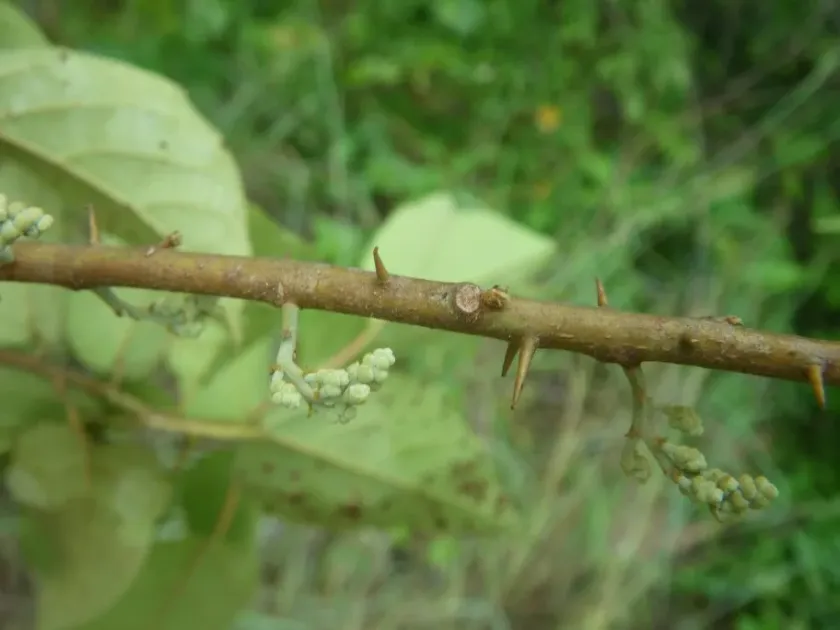
Botanically, it is recognized by its spiny stems and petioles, which provide a deterrent against herbivores. Its leaves are typically large and broadly ovate, optimized for capturing sunlight in the competitive understory environment of tropical forests.
The economic utility of Macaranga spinosa spans several sectors. It is primarily valued in reforestation programs for its fast-growing properties and is also researched for its potential pharmacological applications due to the diverse secondary metabolites found in its tissues.