
Macaranga pruinosa
Macaranga pruinosa
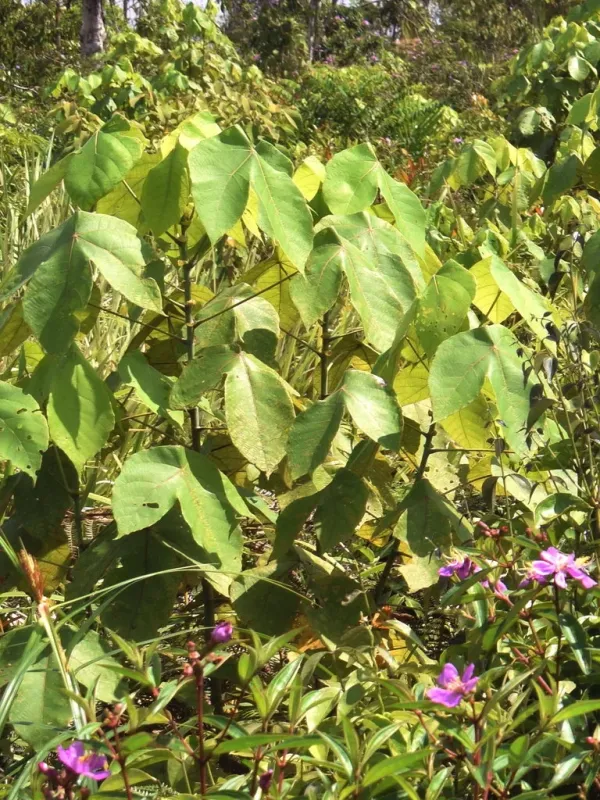
Description
Growing requirements
Macaranga pruinosa is a fast-growing tree species belonging to the Euphorbiaceae family. It is native to the lowland tropical rainforests of Southeast Asia, thriving in regions such as Indonesia, Malaysia, and the Philippines.
As a pioneer species, it is highly adapted to colonizing disturbed lands. Its ability to quickly establish itself in open areas makes it an excellent choice for reforestation and ecological restoration projects in tropical climates.
The tree demands a warm and humid environment, characteristic of equatorial zones. It performs best in areas with high annual rainfall and requires consistent moisture to maintain its vigorous growth rates throughout the year.
In terms of soil requirements, the species prefers deep, well-drained soils rich in organic matter. While it is somewhat adaptable, it performs poorly in waterlogged or extremely nutrient-poor soil conditions.
Agronomic management involves providing adequate spacing between trees to ensure they receive sufficient sunlight. Given its heliophilic nature, Macaranga pruinosa requires minimal shading to reach its full commercial potential.
Yield
The primary commercial utility of Macaranga pruinosa is the production of lightweight timber. Its wood is highly valued in the local plywood and veneer industries due to its ease of processing and uniform texture.
In addition to timber, the species is increasingly utilized for pulpwood production. The short rotation cycles characteristic of this tree allow for high biomass yields, which are essential for sustainable paper manufacturing.
The wood's low density makes it an efficient raw material for various types of packaging, crates, and lightweight structural components. It is easily kiln-dried, which helps prevent warping and enhances the quality of the final product.
Economic efficiency in plantations is driven by the rapid maturity of the trees. Short harvest intervals allow landowners to cycle through crops efficiently while maintaining the site's ecological integrity.
Proper management of the plantation canopy is crucial to maximizing the volume of usable wood, as preventing overcrowding ensures that individual trees can develop straight and healthy trunks suitable for commercial harvest.