
Macaranga mappa
Macaranga mappa
Description
Growing requirements
Macaranga mappa is a fast-growing tropical tree belonging to the Euphorbiaceae family. In the wild, it is primarily found in the rainforests of Southeast Asia and Oceania, preferring warm and humid climatic zones with high intensity of sunlight.
The plant requires consistently high temperatures throughout the year without significant seasonal fluctuations and a substantial amount of annual rainfall. Optimal growth conditions include loose, well-drained soils rich in organic matter.
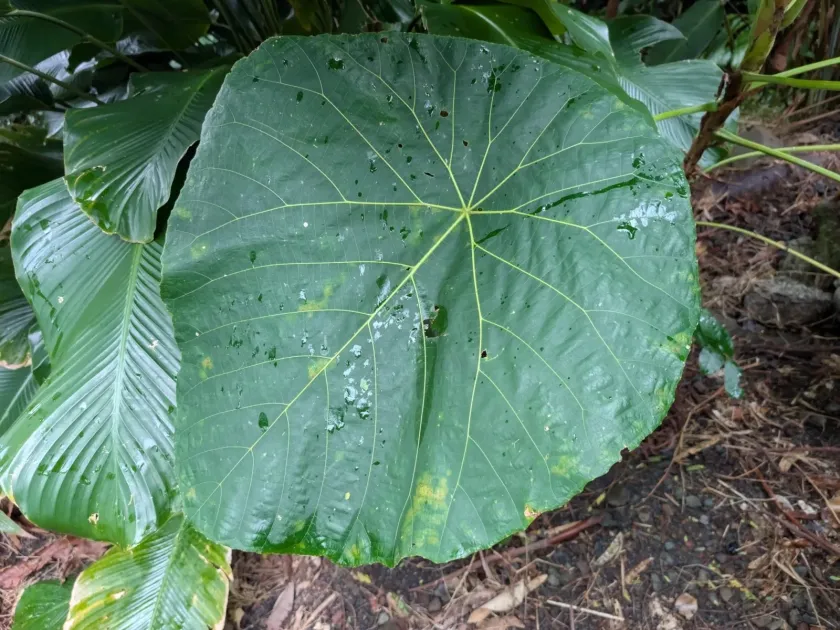
Botanically, the species is distinguished by its huge, peltate leaves, which can reach a diameter of up to half a meter or more. Such large leaf blades allow the plant to conduct efficient photosynthesis in the dense canopy, where capturing even diffuse sunlight is vital.
The tree is sensitive to strong winds due to the high drag of its large leaves; therefore, in cultivation, it should be placed in areas protected from storms. The species does not tolerate waterlogging of the root system, making the selection of a site with efficient drainage a critical success factor.
In its natural habitat, Macaranga often acts as a pioneer species that is among the first to colonize disturbed forest gaps. Its rapid growth rate allows it to build biomass quickly, making it a promising candidate for reforestation programs in tropical regions.
Harvesting
The economic use of this plant is primarily associated with timber production, as the wood is known for being lightweight and soft. In regions where it is cultivated, it is used to produce crates, lightweight building structures, and as a raw material for pulp production.
The leaves of the tree are used in traditional medicine and as traditional food packaging. Due to their large size and waxy coating, they protect contents from moisture and provide certain antiseptic properties.
Biomass harvesting is performed as the trees reach marketable age. In industrial forestry, selective logging methods are practiced to ensure natural regeneration of the species within the stand.
Traditional harvesting methods require careful management of the bark and soil to prevent erosion during heavy tropical rains. With proper forest management, Macaranga can provide a sustainable yield of raw material with minimal impact on the local ecosystem.
The processing technology for this timber requires rapid drying, as the soft structure is prone to degradation under high ambient humidity. Maintaining appropriate temperature controls during the storage of finished lumber helps extend its lifespan and improve the quality of the final product.