
Macaranga javanica
Macaranga javanica
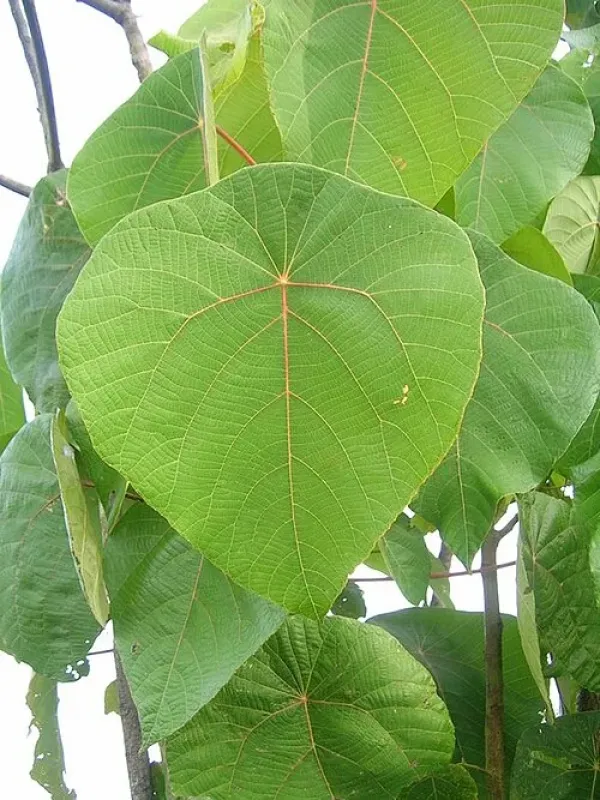
Description
Growing requirements
Macaranga javanica is a fast-growing tree species belonging to the Euphorbiaceae family. It is native to the tropical regions of Southeast Asia, where it serves as a pioneer species that actively participates in the natural restoration of degraded forest ecosystems.
The plant requires a warm and humid tropical climate to reach its full growth potential. It is notably photophilous, thriving best in open areas where direct sunlight allows for rapid biomass accumulation and height gain, which distinguishes it from many climax forest species.
Regarding soil requirements, this species favors well-drained, fertile substrates, yet it demonstrates high phenotypic plasticity, allowing it to grow on disturbed sites or mineral soils left by industrial activities. It is well-suited for reforestation projects aiming to stabilize soil surfaces.
Agrotechnical practices involve sowing seeds in well-prepared nurseries before transplanting seedlings into the field. Spacing should be managed to ensure adequate ventilation and light penetration, which are critical for preventing the development of undesirable fungal growth in thickets.
The industrial and economic importance of Macaranga javanica is centered on its utility as a source of lightweight timber and its role in silviculture. The species is increasingly valued for its capacity to improve soil health through leaf litter decomposition and its rapid canopy closure.
Main diseases and pests
The primary threats to this species include defoliating insects that can cause significant damage to young plantations, slowing down overall development. In addition, localized outbreaks of root pathogens may occur in sites with poor drainage, necessitating effective site selection and soil management to mitigate these risks.