
Macaranga involucrata
Macaranga involucrata
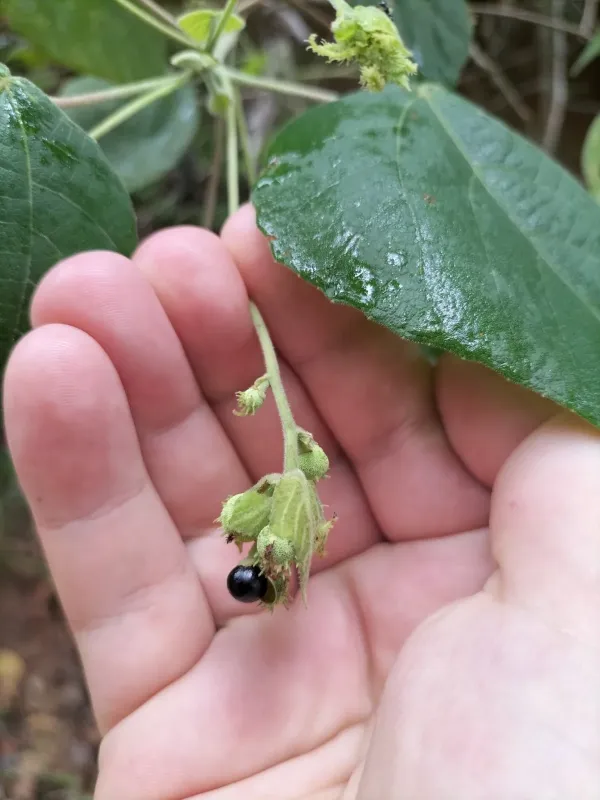
Description
Sowing dates
Reproduction of this culture under natural conditions occurs primarily through seeds. Macaranga seeds require high substrate humidity and stable temperatures for successful germination in nurseries.
For commercial cultivation, it is preferable to use freshly collected seed material, as seed viability decreases rapidly during prolonged storage outside the habitat.
Sowing is carried out in specialized containers with drained soil that mimics leaf litter, which is critical for ensuring a high percentage of culture germination.
In vegetative propagation, semi-lignified cuttings are used, requiring treatment with rooting stimulants and the maintenance of greenhouse conditions during the first weeks of development.
The best time to start an active cultivation cycle falls at the beginning of the rainy season, which coincides with the biological rhythm of the species in the tropical belt.
Growing requirements
Macaranga involucrata is a light-loving plant that requires a high level of insolation for full crown development and to accelerate metabolic processes.
The crop has increased requirements for soil composition, preferring loose, loamy, or sandy soils with a high concentration of organic matter.
For normal growth, a consistently warm climate without sharp temperature fluctuations is necessary, as the plant is extremely sensitive to sub-zero temperatures.
The irrigation system must ensure constant moderate soil moisture, although water stagnation in the root zone can lead to the development of fungal infections.
The pH level of the soil solution should be in the slightly acidic or neutral range, which promotes optimal absorption of nutrients.
Yield
The economic use of the crop is focused on obtaining biomass, which is used as a natural raw material for various industrial needs.
Macaranga belongs to fast-growing tree species capable of increasing a significant volume of vegetative mass in a short time under suitable conditions.
In plantation management, yield is determined by planting density and the efficiency of applying complex fertilizers that stimulate rapid stem growth.
The intensity of wood increment depends directly on lighting, so skillful crown management allows for significantly increasing the yield of marketable products.
Productivity indicators are also closely related to the genetic potential of specific populations and the quality of care during the early stages of vegetation.
Main diseases and pests
The main danger to the crop is root rot, which occurs when drainage is disturbed and lower soil layers become waterlogged.
Tropical pests such as mealybugs and spider mites can damage young leaves, significantly slowing down the general development of the plant.
Bacterial leaf spots are often diagnosed during periods of high humidity, requiring preventative treatment with broad-spectrum fungicides.
Nematodes that attack the root system are a hidden threat capable of suppressing the growth of the entire plantation in the absence of regular phytosanitary control.
- Crop rotation compliance.
- Regular sanitary pruning.
- Monitoring leaf blades for pests.
Harvesting
Harvesting of wood raw materials is carried out by planned logging, taking into account the age of the tree and its attainment of marketable quality parameters.
The harvesting process requires careful handling of the bark, as it possesses specific properties that are important to preserve for subsequent processing.
Optimal harvesting times are determined by the state of the cambium and wood density, which allows obtaining the highest quality material for industrial applications.
After removing the main mass of the tree, the site is cleared of debris to prevent the spread of pests and diseases in young plantings.
The collection technology includes primary sorting of raw materials directly on the plantation, which simplifies logistics and further processing at production facilities.