
Macaranga indica
Macaranga indica
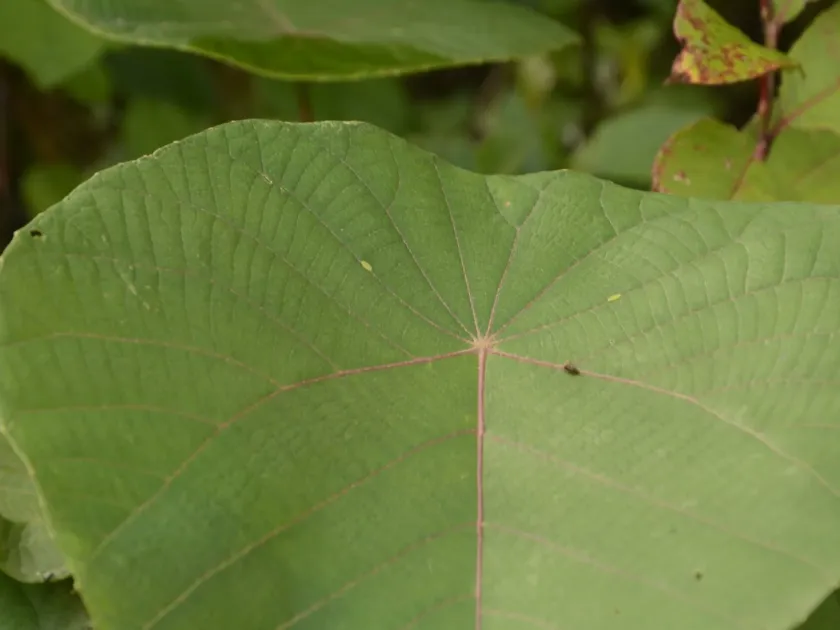
Description
Growing requirements
Macaranga indica is a fast-growing, evergreen tree belonging to the Euphorbiaceae family. It is widely recognized for its ecological role as a pioneer species that colonizes disturbed forest areas rapidly.
The native distribution of this species spans across South and Southeast Asia, including India, Nepal, and Indonesia. It thrives in tropical climates characterized by warm temperatures and high precipitation levels.
To ensure optimal development, Macaranga indica requires consistent tropical humidity and protection from cold temperatures. It is not suitable for regions that experience frost or extreme seasonal temperature fluctuations.
The plant prefers well-drained soil rich in organic matter. While it is adaptable to different soil types, deep, loamy soils that maintain moisture without becoming waterlogged provide the best conditions for growth.
As a light-demanding tree, it requires full solar exposure for rapid vertical growth. In cultivation, managing tree spacing is essential to ensure that each individual has enough light to maximize biomass production.
Yield
Macaranga indica is primarily cultivated for its lightweight timber. The wood is highly valued in the production of plywood, matchsticks, and paper pulp, making it a sustainable source for the timber industry.
The tree's rapid growth rate allows for short rotation cycles, which is highly beneficial for plantation forestry. High yields of biomass can be achieved within a relatively short timeframe compared to traditional hardwood species.
Beyond timber production, the foliage serves as an effective green manure, adding essential nutrients to the soil. This cycle helps maintain soil fertility in plantation environments, reducing the need for synthetic inputs.
Yield management depends on appropriate planting density and early maintenance. Once established, the tree requires minimal management, as its fast canopy closure suppresses competing weeds effectively.
Research into the secondary metabolites of the plant suggests potential future applications in the pharmaceutical industry, providing an additional incentive for sustainable cultivation and harvest.
Main diseases and pests
Common threats to Macaranga indica include various leaf-feeding insects that thrive in humid tropical conditions. Defoliation by caterpillars can temporarily stunt the growth of young trees if not controlled.
Fungal pathogens causing leaf spot and stem rot can become a problem if planting sites suffer from poor drainage. Proper site selection and land preparation are the most effective preventive measures against these diseases.
Competition from invasive plant species can hinder the establishment of Macaranga seedlings. Consistent weeding during the early stages of plantation development is crucial for long-term health.
Effective management involves a combination of monitoring and sanitary practices. Regularly removing infected plant debris helps break the lifecycle of potential pests and fungal pathogens.
- Implementing regular spacing to improve airflow.
- Monitoring for early signs of leaf discoloration.
- Ensuring adequate soil drainage.
- Promoting biodiversity to encourage natural predators.
- Scheduled sanitary pruning of branches.