
Macaranga hypoleuca
Macaranga hypoleuca
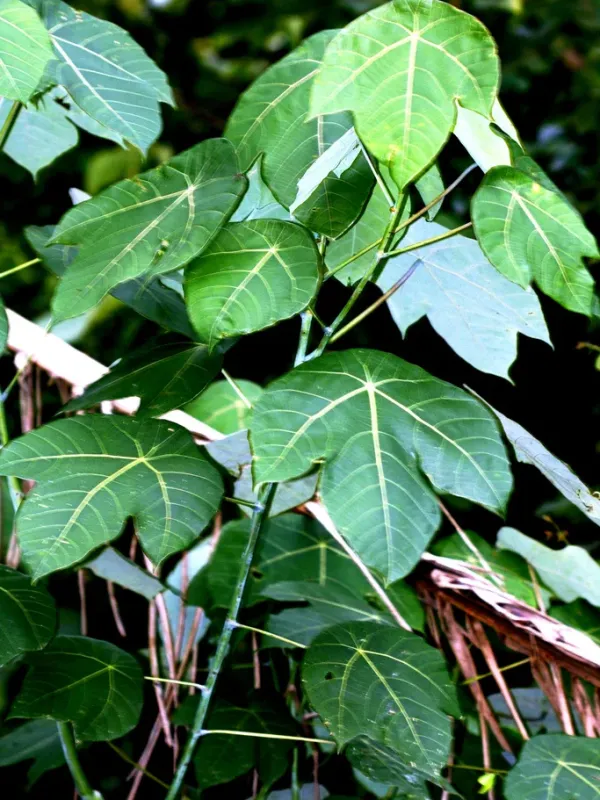
Description
Growing requirements
Macaranga hypoleuca is a pioneering tree species belonging to the Euphorbiaceae family, widely native to the tropical forests of Southeast Asia.
This species thrives in hot and humid tropical climates, requiring high levels of annual rainfall and consistent temperatures to maintain its rapid growth rate.
It prefers well-drained soil types, although its pioneer nature allows it to establish itself effectively in degraded lands or cleared forest gaps where other species struggle.
Being a highly light-demanding plant, it requires full sun exposure, making it an excellent colonizer for areas disturbed by human activity or natural disasters.
It is extremely sensitive to frost and prolonged dry seasons, meaning it is strictly limited to tropical ecological niches with high environmental stability.
Yield
While Macaranga hypoleuca is not a primary agricultural crop, its rapid biomass production makes it valuable in forestry and ecological restoration projects.
The wood is relatively soft and lightweight, suitable for small-scale construction, paper pulp production, or local fuel sources in rural tropical areas.
As a fast-growing species, it provides significant soil protection by covering bare surfaces and contributing organic matter through continuous leaf litter production.
There is growing interest in utilizing its biomass for sustainable fiber production, though commercial cultivation protocols remain in the experimental stage.
Its economic value is largely measured by its contribution to ecosystem services, such as forest canopy development and habitat creation for local fauna.
Main diseases and pests
The primary biological threats include various sap-sucking insects like aphids, which target young foliage and can stunt development if infestation is severe.
Macaranga species have evolved a sophisticated mutualism with ants, which inhabit the tree's stems and provide defense against leaf-eating insects and herbivores.
Fungal pathogens can be problematic in high-density stands where airflow is restricted, leading to leaf spot diseases or bark rot in damaged sections.
Weed competition during the seedling stage can significantly reduce the establishment rate, necessitating clear space for young trees to access light.
Maintaining the ecological balance within the grove is the most effective method for natural pest control, as chemical interventions are rarely practical in forestry settings.