
Macaranga hosei
Macaranga hosei
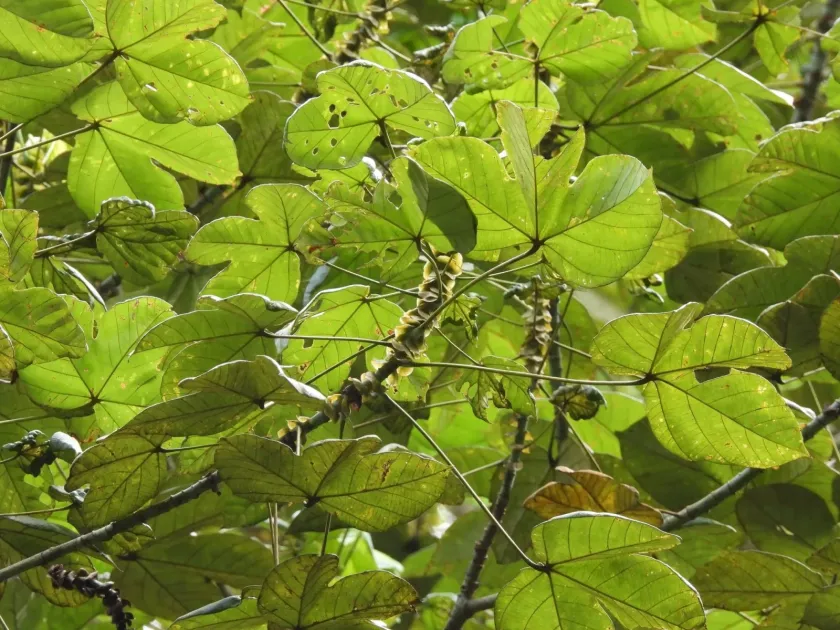
Description
Growing requirements
Macaranga hosei is a notable species within the Euphorbiaceae family, widely recognized for its rapid growth in the tropical regions of Southeast Asia. As a pioneer species, it excels in colonizing cleared or degraded areas, playing a vital role in natural ecological succession.
Regarding climatic requirements, this species thrives in equatorial climates characterized by high temperatures and consistent rainfall. It is an obligate heliophile, meaning it requires full exposure to sunlight to maintain its characteristic rapid growth rate throughout the developmental stages.
Soil requirements are relatively modest, as the tree adapts well to various soil types, including nutrient-poor or degraded substrates. Well-drained soils are preferred to ensure healthy root development, as the plant does not tolerate waterlogging for extended periods.
The standard agronomic practice involves establishing tree nurseries where seeds are germinated under controlled conditions. Once saplings reach the required height, they are transplanted into open fields, where they quickly form a closed canopy that suppresses invasive weeds.
In terms of economic utility, Macaranga hosei is highly valued for reforestation projects due to its ability to stabilize soil and improve soil quality. Its wood is lightweight, making it suitable for producing pulp, plywood, and various secondary construction materials in tropical forestry.
Main diseases and pests
Fungal pathogens represent the primary threat to the vitality of the plant, especially in high-humidity conditions where airflow is restricted. These infections can lead to foliage loss and reduced annual increment, which is detrimental to forest plantation productivity.
Insects and certain species of herbivores can cause damage to the tender shoots and leaves of younger trees. Integrated pest management, focusing on biological diversity and regular stand monitoring, is essential to minimize damages and ensure the successful establishment of the forest plantation.