
Macaranga griffithiana
Macaranga griffithiana
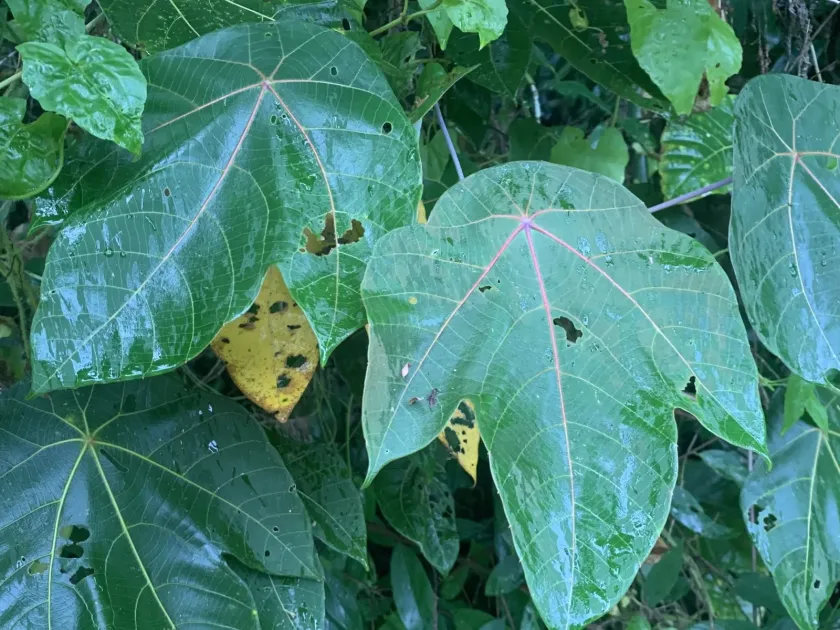
Description
Growing requirements
Macaranga griffithiana is a prominent member of the Euphorbiaceae family, native to the tropical forests of Southeast Asia. Known for its rapid growth rate, it functions as a pioneer species capable of colonizing disturbed forest areas effectively.
The plant thrives in humid tropical climates that provide consistent precipitation throughout the year. It requires high average temperatures and high humidity levels, as it is strictly adapted to regions where thermal fluctuations are minimal and growth occurs continuously.
Soil requirements for optimal development include well-draining substrates with moderate fertility. The species is highly sensitive to waterlogging; therefore, maintaining an adequate soil structure that prevents moisture accumulation around the root system is essential for plant health.
Light availability is the primary driver of its growth cycle. As a sun-loving pioneer species, Macaranga griffithiana shows significantly increased biomass production when exposed to direct sunlight, making it ideal for reforestation on open sites or forest clearings.
Agricultural management involves careful spacing and early weed control to ensure the saplings have sufficient access to light and nutrients. Systematic monitoring of the stand is necessary to facilitate rapid crown closure and prevent the encroachment of undesirable competing vegetation.
Harvesting
The economic value of Macaranga griffithiana lies primarily in its lightweight timber. Its wood is highly valued in the production of plywood, shipping crates, and various interior construction components due to its specific gravity and ease of processing.
Harvesting is typically integrated into sustainable forestry management programs. Given the fast growth cycle of the species, it serves as a reliable source of raw material that can be replenished relatively quickly compared to slow-growing hardwood species.
Beyond timber production, the tree plays a vital role in ecological restoration. It is often planted to stabilize soil on degraded land, preventing erosion and serving as a foundation for secondary forest succession in tropical environments.
In landscaping, it is utilized for its ornamental foliage and ability to create immediate visual mass. Maintenance involves pruning to remove dead or diseased branches, ensuring the health and structural integrity of the individual trees within a plantation or landscape.
Management of the harvesting cycle must prioritize maintaining the vitality of the remaining forest patch. By implementing selective harvesting techniques, land managers can ensure the continued productivity and environmental benefits of the Macaranga griffithiana population.