
Starry scabious
Lomelosia stellata
Description
Sowing dates
Starry scabious (Lomelosia stellata) is typically grown from seed sown directly in the garden after the danger of spring frost has passed. Planting in late April or May ensures the soil is warm enough to trigger rapid and uniform germination.
Indoor sowing can be initiated in late winter or early spring using plug trays. However, care must be taken during transplantation, as the plant develops a deep taproot that is highly sensitive to disturbance and can suffer from transplant shock.
Seeds should be covered lightly with fine soil or vermiculite, as they require some light exposure to germinate efficiently. Keep the growing medium consistently moist but never waterlogged during the germination phase.
Once seedlings have developed their second set of true leaves, they should be thinned or spaced out. Providing adequate space, around 25 to 30 centimeters apart, is crucial for preventing humidity buildup between the plants.
For large-scale cultivation, drilling seeds in rows is common. Ensure that the row spacing allows for mechanical or manual weeding to keep the crop free from competition during the early stages of growth.
Growing requirements
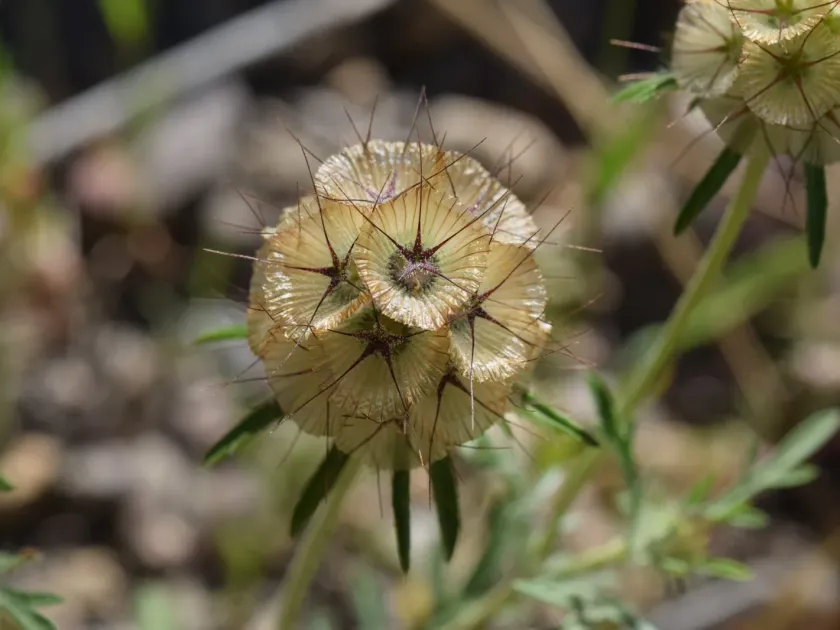
This species belongs to the Caprifoliaceae family and thrives in open, sunny locations. It requires full sun exposure to develop its characteristic star-shaped seed pods properly, making it unsuitable for shaded borders or intercropping with tall plants.
Well-drained, light, and sandy soil is a non-negotiable requirement for Starry scabious. It originates from Mediterranean habitats, meaning it is perfectly adapted to dry, stony soils but struggles significantly in heavy clay that retains water.
Soil pH levels should be neutral to slightly alkaline. If the soil is acidic, amending it with lime or dolomite is recommended before planting to ensure optimal nutrient uptake and plant vigor.
While the plants are relatively drought-tolerant once established, regular irrigation during the initial vegetative phase and flower bud development helps to achieve taller stems and more productive seed yields.
Excessive fertilization, particularly with nitrogen, should be avoided as it encourages leafy growth at the expense of floral production. A balanced fertilizer with a higher phosphorus content is preferred to support seed pod development.
Main diseases and pests
Fungal diseases are the most frequent challenge in the cultivation of Lomelosia stellata. Powdery mildew can appear if there is poor air circulation or high ambient humidity, leading to premature foliage yellowing and browning.
Root rot is a critical threat that typically results from improper irrigation or poor drainage. Once a plant is affected by root rot, it rarely recovers, so preventative drainage management is the primary control method.
Aphids are a common pest that targets the developing flower buds and soft shoots. Their feeding can cause structural damage and stunted growth, necessitating early intervention with biological controls or mild insecticidal soaps.
Spider mites may become problematic during periods of hot, dry weather. They thrive in dusty or stressed plants, so maintaining a proper watering schedule acts as a significant preventative measure against infestations.
Crop rotation is essential for long-term health. Avoiding planting members of the Caprifoliaceae family in the same plot year after year reduces the accumulation of soil-borne pathogens and nematode populations.
Harvesting
The primary agricultural objective for Starry scabious is the harvest of its decorative star-shaped calyces, which are highly prized by the dried flower industry. Harvest should begin once the pods have matured and hardened but before they lose their aesthetic appeal or shatter.
Cutting should take place during dry, mid-morning hours after any dew has evaporated. Using sharp garden shears, harvest the stems at the base or at the desired length to ensure the pods are handled delicately.
Drying is best accomplished by hanging the stems in bundles upside down in a dark, airy location. This process preserves the natural light color and structural integrity of the pods, preventing them from turning brown or yellow.
Once fully dried, these botanical elements are versatile in floral design, often used in rustic arrangements, modern bouquets, and wreaths. Their unique geometry provides a distinct texture that is rare among other common dried flowers.
When stored in a dry, low-humidity environment, the harvest can remain in excellent condition for several years. This longevity makes Starry scabious a profitable specialty crop for small-scale commercial flower farms.