
Perez's Statice
Limonium puberulum (Webb) Kuntze x Limonium perezii (Stapf) F. T. Hubb.
Description
Sowing dates
Perez's Statice is best propagated from seeds started indoors about 10 to 12 weeks before the final frost date in your region.
The seeds require light to germinate and should be placed on the surface of a moist, well-draining seed-starting mix without being buried deep.
Maintaining a temperature of around +20°C is essential for uniform germination and healthy development of the seedlings during the early stages.
Once the seedlings develop at least two sets of true leaves, they should be transplanted into individual pots to avoid root competition.
Hardening off the plants is a crucial step before transplanting them into the garden to ensure they can withstand outdoor environmental conditions.
Growing requirements
Perez's Statice, belonging to the Plumbaginaceae family, thrives in sunny, open locations with well-draining, sandy or loamy soil.
The plant is highly valued for its robust nature and ability to tolerate coastal conditions, including mild salt spray and windy exposures.
It prefers a neutral to slightly alkaline soil pH and absolutely requires excellent drainage to prevent crown rot and other moisture-related issues.
While the plant is drought-tolerant once established, providing regular water during the initial growth phase will lead to more vigorous flowering.
Avoid excessive fertilization with high-nitrogen products, as this promotes foliage growth rather than the desired abundance of flower spikes.
Yield
This crop is a high-value item for floral production, specifically for both fresh-cut arrangements and as a reliable source of quality dried flowers.
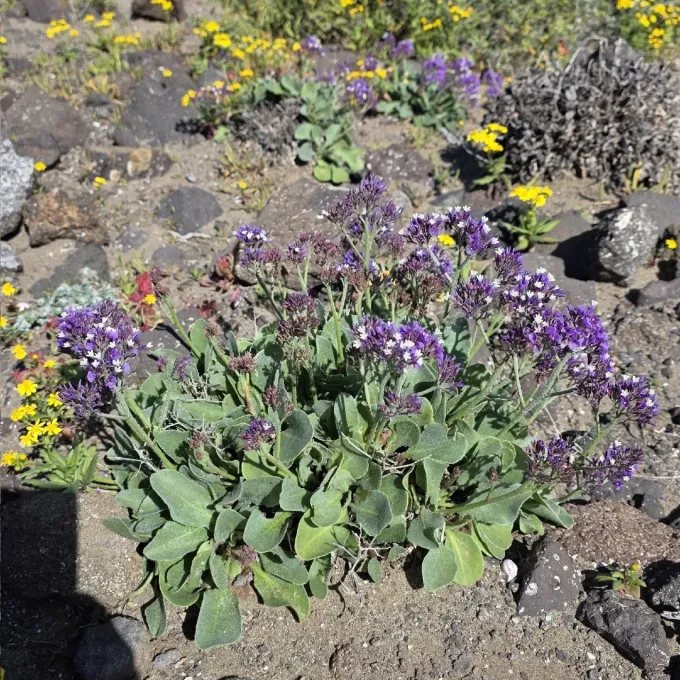
A single, well-maintained plant can produce several sturdy, branched flower stems that retain their vibrant deep-purple color for a long period.
Yield capacity is significantly improved by spacing plants correctly, which allows for maximum airflow and prevents stem distortion.
When managed as a commercial crop, consistent harvesting promotes the continuous production of new flower spikes throughout the season.
The aesthetic longevity of the flowers makes them a preferred choice for floral designers who require durable materials for year-round displays.
Main diseases and pests
Common threats to the health of Perez's Statice include fungal diseases such as gray mold (Botrytis) which occur during periods of high humidity.
Powdery mildew may affect the foliage if the plants are spaced too closely, hindering proper air circulation and creating a damp microclimate.
Aphids and spider mites are the most frequent insect pests, often attacking the terminal parts of the flower stems and soft leaf tissues.
Early detection and the use of targeted biological or chemical controls can effectively manage pest populations without damaging the plant's delicate flowers.
Maintaining a clean garden bed by removing dead plant material helps to significantly reduce the risk of recurring fungal infections in subsequent seasons.
Harvesting
The harvest should be timed when the individual flowers in the cluster are fully open to ensure the longevity of the stems after being cut.
Use clean, sharp shears to cut stems at the base, ensuring that you do not damage the center of the plant where future blooms will emerge.
For dried flower production, hang the cut stems upside down in a cool, dark, and well-ventilated area to preserve the intensity of the petal color.
Perez's Statice is renowned for maintaining its shape and rigid structure, which makes it ideal for shipping and long-term storage in floral supplies.
Proper post-harvest handling ensures that the deep purple tones do not fade quickly, maximizing the commercial value of the final dried product.