
Gmelin sea lavender
Limonium gmelinii (Willd.) Kuntze
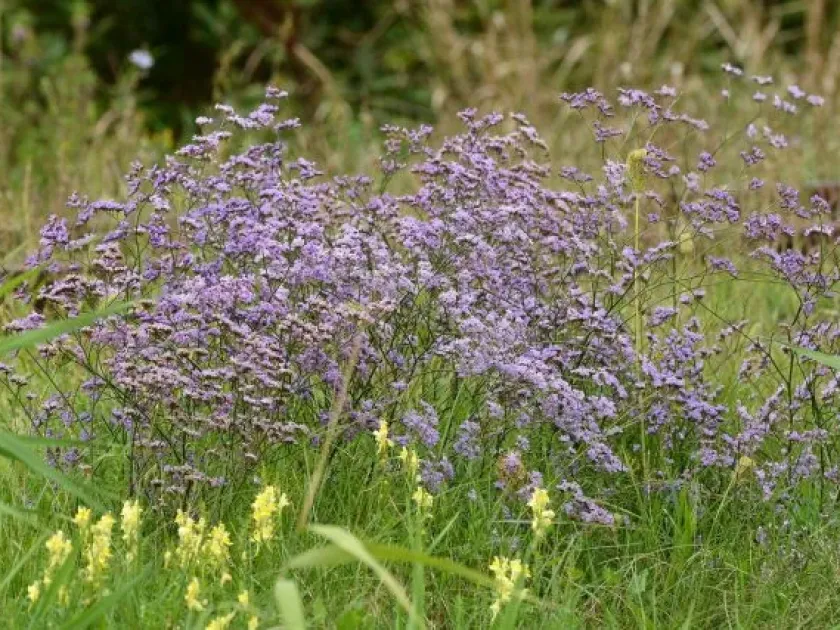
Description
Sowing dates
Gmelin sea lavender (Limonium gmelinii) is a member of the Plumbaginaceae family. It is a hardy herbaceous perennial valued for its biological properties and aesthetic appeal.
Seeds are typically sown in early spring in well-prepared seedbeds. Since the seeds are small and have a tough coat, pre-sowing stratification is highly recommended to improve germination rates.
When starting from seedlings, they should be transplanted to their permanent location once the risk of frost has passed and the root system is sufficiently developed.
Proper spacing is essential for this species. To ensure optimal air circulation and prevent overcrowding, plants should be placed at intervals of at least 30-40 cm.
Consistent moisture is required during the germination phase, but once the plants establish their deep taproots, they become significantly more resilient to dry spells.
Growing requirements
This crop is highly prized for its tolerance to saline soils and arid conditions, making it an excellent candidate for the reclamation of degraded or salty farmland.
Full sun exposure is a critical requirement for Gmelin sea lavender. Any degree of shade will reduce the plant's vigor and its ability to accumulate key chemical compounds.
The plant thrives in light, well-draining soils. While it tolerates various soil types, waterlogging must be avoided at all costs to prevent root rot.
In terms of soil fertility, the plant does not require heavy fertilization. Excess nitrogen can lead to lush leaf growth at the expense of root development, which is undesirable for commercial production.
The species demonstrates excellent cold hardiness, surviving harsh winters typical of its native steppe habitats without the need for additional ground cover.
Main diseases and pests
The most common issues for this crop involve root-related pathologies caused by poor drainage, specifically fungal infections like Fusarium that thrive in wet conditions.
Foliar diseases such as powdery mildew can appear in environments with high humidity and poor ventilation, showing as a characteristic white coating on the leaves.
Aphid infestations are the primary insect threat, particularly during the flowering stage, as they target the succulent tissues of the floral spikes.
Leaf-eating caterpillars may occasionally cause damage to the rosettes, which requires timely scouting and, if necessary, localized pest control measures.
Maintaining a clean, weed-free environment and proper spacing helps mitigate most of these threats, reducing the reliance on chemical interventions.
Harvesting
Harvesting for medicinal or industrial purposes focuses on the roots. These should be extracted from plants that are at least two to three years old for peak yield.
The optimal harvest timing is late autumn or early spring, periods when the plant's metabolic activity is lowest and the accumulation of active compounds is at its maximum.
After excavation, the roots must be thoroughly cleaned of soil debris, rinsed, and sliced into smaller segments to ensure uniform drying.
Drying is performed in shaded, airy conditions or in controlled-temperature dryers, ensuring that the temperature does not exceed 50 degrees Celsius to prevent degradation.
The final product is widely used in leather tanning due to its high tannin content and in traditional medicine for its astringent and antimicrobial properties.