
Limonium puberulum
Limonium puberulum (Webb) Kuntze
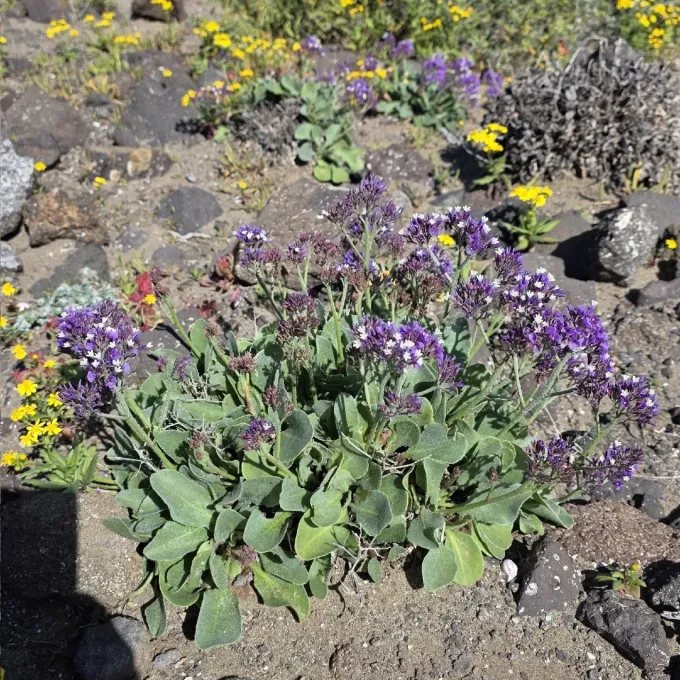
Description
Sowing dates
Sowing Limonium puberulum seeds requires precise timing, usually in late winter, to allow the plants to develop strong roots before the first heat of summer.
The seeds should be sown on the surface of a light, sandy potting mix, as they require exposure to indirect light to trigger the germination process successfully.
Maintaining a temperature range between 18 and 22 degrees Celsius is essential for uniform germination, which typically occurs within two to three weeks.
Once seedlings emerge, it is critical to provide adequate ventilation to prevent "damping off," a common issue in propagation trays with high humidity levels.
Transplanting should be handled with extreme care, as Limonium species possess a sensitive taproot system that does not tolerate root disturbance well.
Growing requirements
Limonium puberulum is a member of the Plumbaginaceae family and is native to the Canary Islands, where it thrives in exposed, rocky, and saline coastal habitats.
This species is a true xerophyte, meaning it has adapted to survive in low-water environments and requires excellent soil aeration to prevent root suffocation.
Full sun exposure is a mandatory requirement for the development of healthy rosettes and the production of its characteristic vibrant, papery flower spikes.
The soil should be gritty, well-draining, and slightly alkaline, mimicking the volcanic and coastal soils where this plant occurs in its natural geographic range.
In ornamental landscaping, it is best suited for rock gardens or coastal borders, where its drought tolerance can be fully utilized and appreciated.
Main diseases and pests
While robust in its natural habitat, this plant can be susceptible to powdery mildew when cultivated in stagnant air conditions or high-humidity greenhouse environments.
Root rot caused by Phytophthora or Pythium fungi is a common threat, often resulting from excessive irrigation or the use of heavy, water-retentive growing media.
Insects such as thrips and aphids may colonize the flower stalks, which can damage the delicate floral parts and reduce the plant's overall aesthetic value.
Integrated pest management, including monitoring and biological controls, is highly recommended to maintain the health of the specimens without relying on harsh chemicals.
Proper spacing and careful management of irrigation cycles remain the best prophylactic measures against both fungal pathogens and insect infestations.
Harvesting
Harvesting for dried flower arrangements should occur when the individual flowers are fully open but before they begin to fade or drop their color.
Stems must be harvested early in the morning, once the dew has evaporated, to ensure the tissue remains firm and the color vibrancy is locked in.
The drying process should be carried out in a dark, dry, and well-ventilated space, ensuring that no direct sunlight reaches the drying flowers to prevent discoloration.
Bundling the stems loosely with rubber bands allows the stems to shrink slightly during drying without the clusters falling out or becoming misshapen.
With careful drying, Limonium puberulum can retain its decorative appeal for months or even years, making it a valuable material for permanent floral displays.