
Wild privet
Ligustrum vulgare L.
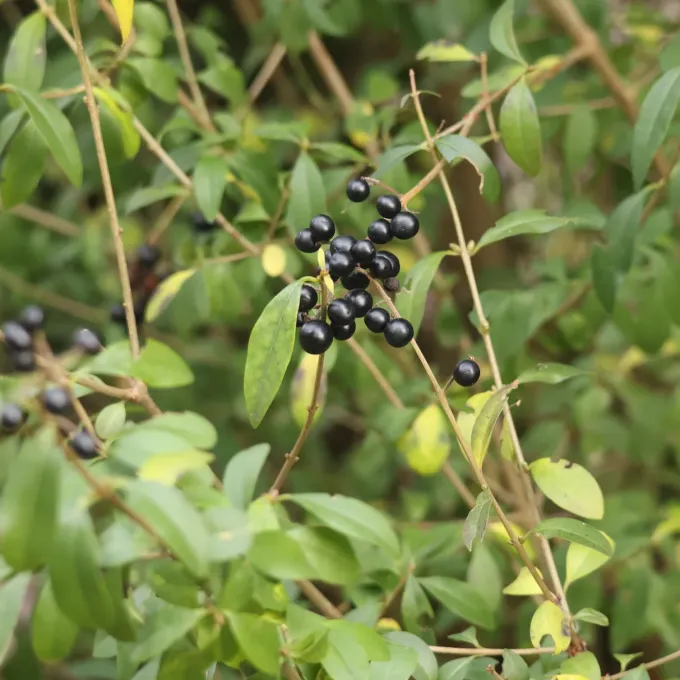
Description
Sowing dates
Wild privet (Ligustrum vulgare L.) is a member of the Oleaceae family. It is widely propagated using semi-hardwood cuttings taken in mid-to-late summer, which usually root reliably in sandy, moist compost.
Seed propagation is possible but involves a lengthy cold stratification process, often requiring months of low temperatures to break dormancy. Sowing typically occurs in early autumn or spring in seed trays.
For agricultural or landscape use, such as living fences, young plants are spaced at 20-30 cm intervals in trenches. This close spacing ensures a dense, compact growth habit essential for effective hedging.
The species is native to Europe, North Africa, and Western Asia. Its ability to tolerate various environmental conditions has allowed it to become a naturalized plant in many parts of the world.
Maintenance of young plantings requires consistent irrigation during the first growing season to establish a deep root system. Once mature, the shrubs become notably resilient and self-sufficient.
Growing requirements
Wild privet is highly adaptable to a range of soil types, including clay and chalk, provided they are not waterlogged. It performs best in fertile, well-drained loams with a neutral pH.
While the plant thrives in full sun, it shows remarkable tolerance for partial shade. However, heavy shade can lead to sparse foliage, making it less effective as a privacy screen.
The species is known for its hardiness. It can withstand urban pollution and salt spray, making it an excellent candidate for roadsides and industrial greening projects.
Regular pruning is the cornerstone of privet care. To maintain a formal shape or dense hedge, it should be trimmed at least twice a year during the active growing season.
Soil management should include annual applications of organic mulch or balanced fertilizers in early spring to support the vigorous annual growth required for frequent trimming.
Main diseases and pests
Powdery mildew is a common fungal issue that affects foliage during periods of high humidity and poor air circulation. Proper spacing during planting significantly reduces this risk.
Privet leaf miners and sawfly larvae are significant insect threats. These pests can rapidly defoliate a shrub if left unchecked, necessitating early detection and targeted insecticide applications.
Aphids often colonize the succulent tips of new growth. While rarely fatal, they weaken the plant and can facilitate the growth of sooty mold on the honeydew they excrete.
Root rot, caused by various soil-borne pathogens like Phytophthora, can occur in poorly drained soils. Improving soil structure and avoiding over-irrigation are key preventative measures.
Sanitation practices, such as removing fallen leaves at the end of the season, are crucial for minimizing the overwintering potential of various pests and fungal spores in the garden environment.