
Delavay privet
Ligustrum delavayanum Har.
Description
Growing requirements
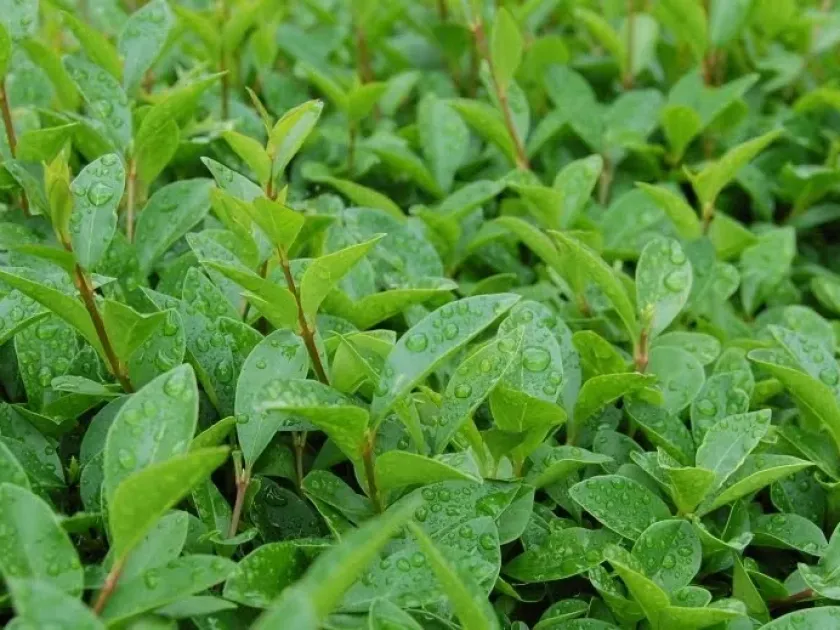
Delavay privet (Ligustrum delavayanum) is an evergreen or semi-evergreen shrub belonging to the Oleaceae family. Originally from the mountainous regions of South-West China, this species is highly valued for its dense foliage and fine texture.
The plant thrives in well-drained, fertile soils that provide adequate moisture without waterlogging. It is relatively adaptable to various soil types but prefers neutral to slightly alkaline pH levels for optimal nutrient uptake.
Regarding climate, this shrub requires a sheltered position to thrive. It is not fully hardy in extremely cold regions and may suffer frost damage if exposed to harsh, freezing winds, necessitating winter protection or container gardening in northern climates.
Agronomic practices for this species focus heavily on pruning and shaping. Because the shrub is dense, regular trimming is essential to maintain its health, promote outward growth, and prevent the inner parts of the plant from becoming bare.
In terms of хозяйственное (commercial and landscape) use, Ligustrum delavayanum is a staple in ornamental horticulture. It is widely planted as a hedging material or for topiary designs due to its slow-to-moderate growth rate and excellent response to shearing.
Main diseases and pests
The primary threats to Ligustrum delavayanum include fungal diseases such as leaf spot and powdery mildew. These issues often arise when planting density is too high, leading to poor air circulation within the shrub's canopy.
Insect pests, including scale insects, mites, and aphids, are common problems. These organisms can weaken the plant by feeding on sap, often leaving behind sticky residues that attract secondary fungal infections like sooty mold.
Effective management involves the use of horticultural oils and systemic insecticides. Early detection is key, as these pests can rapidly colonize new growth, significantly impacting the decorative value of the shrub.
Fungal management requires timely fungicide applications during damp spring weather. It is also important to remove and destroy any infected plant tissue immediately to stop the spread of spores within the garden or nursery.
Cultural prevention remains the most effective strategy. By ensuring plants have enough space for airflow and providing balanced nutrition, the gardener can strengthen the shrub's natural resilience against common biotic stressors.