
Glossy privet
Ligustrum lucidum W. T. Aiton
Description
Growing requirements
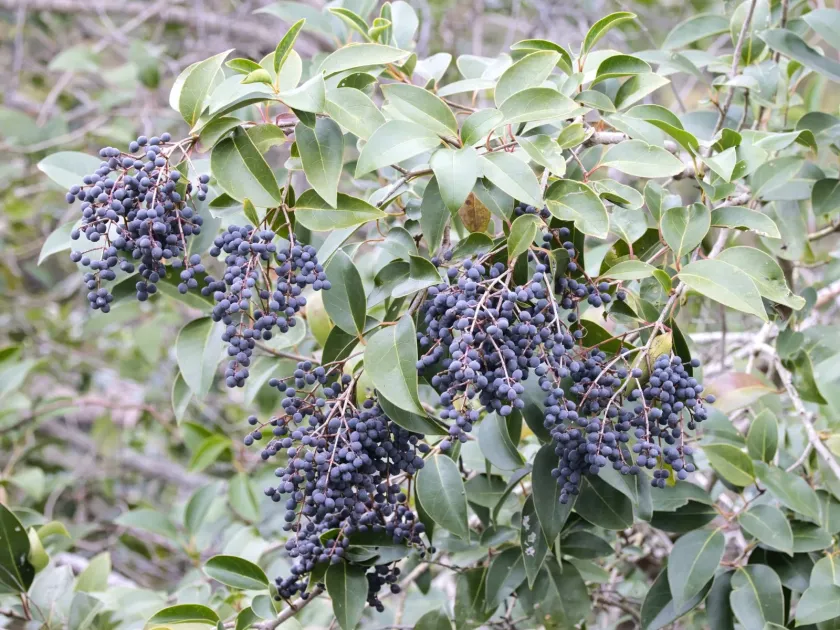
Glossy privet (Ligustrum lucidum) is a prominent evergreen shrub or tree belonging to the Oleaceae family. It is recognized for its large, glossy, dark green leaves and clusters of fragrant white flowers that appear in late summer.
Native to temperate and subtropical regions of China, Korea, and Japan, this species has been widely introduced globally as an ornamental plant. It adapts well to various climates but thrives best in warm, humid temperate zones.
The plant requires well-drained, nutrient-rich soil and prefers full sun exposure to maintain its dense foliage. While it can tolerate partial shade, its growth rate and flowering density are significantly higher in open, sunny locations.
Agrotechnical maintenance involves consistent watering during dry periods, particularly for young specimens. Annual pruning is essential to maintain the desired shape and size, as the plant responds very well to regular shearing.
In landscaping, Ligustrum lucidum is widely utilized for privacy screens, windbreaks, and as a formal decorative tree. Its ability to tolerate air pollution makes it an excellent choice for urban and residential environmental improvement.
Main diseases and pests
Glossy privet is susceptible to infestations by scale insects and aphids, which feed on the sap and cause leaf yellowing or stunted growth. Monitoring the undersides of leaves is critical for early detection.
Powdery mildew is a common fungal issue that appears as a white, dusty layer on the foliage. It typically occurs during periods of high humidity and poor air circulation within the shrub canopy.
Root rot can be a severe issue if the plant is grown in poorly drained, waterlogged soils. Ensuring an adequate soil drainage system during planting is the primary method of preventing this condition.
Leaf spot diseases may occasionally affect the plant in overly damp climates. Sanitation, such as removing fallen leaves and pruning infected branches, helps mitigate the spread of fungal spores.
Integrated pest management, including regular inspection and the use of approved insecticides and fungicides, is necessary to keep the plant in optimal health. Maintaining overall tree vigor through proper feeding is the best defense against threats.