
Japanese privet
Ligustrum japonicum Thunb.
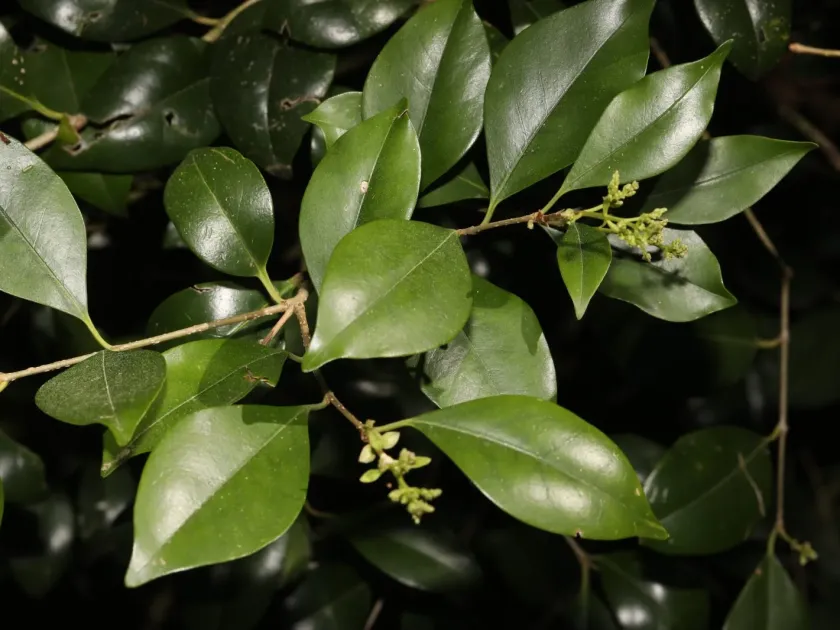
Description
Growing requirements
Japanese privet (Ligustrum japonicum Thunb.) is a robust evergreen shrub belonging to the Oleaceae family. Native to Japan and Korea, it is widely cultivated globally for its dense foliage and ability to form impenetrable hedges.
The plant is characterized by leathery, dark green leaves and fragrant white flowers arranged in panicles that bloom in early summer. Its fruit appears as small, black, glossy drupes that attract birds but are considered mildly toxic to humans and pets.
It thrives in full sun to partial shade conditions. While it is adaptable to various soil types, the shrub prefers moist, well-drained loamy soils. Good drainage is critical, as the roots can be sensitive to prolonged waterlogging.
The agronomic management of this species is centered on regular pruning. As it grows vigorously, it requires multiple trimmings throughout the growing season to maintain its shape as a hedge or a topiary specimen.
Regarding climatic requirements, Japanese privet is hardy in warmer zones but may require protection against severe frost in cooler regions. It is highly valued for its year-round greenery, which provides structure to the garden landscape.
Main diseases and pests
Japanese privet is commonly targeted by scale insects and aphids, which attach to the stems and leaves, extracting vital sap. Severe infestations can lead to stunted plant growth and the development of sooty mold.
Spider mites can also be a significant issue, especially in hot and dry climates. They typically infest the undersides of leaves, causing a stippled appearance and eventual leaf drop if left untreated.
Fungal diseases such as powdery mildew are frequent in humid environments with poor air circulation. The disease appears as a white, powdery coating on the foliage, which can weaken the plant's overall health.
Root rot is another threat, often caused by overwatering or poorly draining soil. Ensuring proper soil aeration and avoiding excessive irrigation are key preventive measures for maintaining plant health.
Integrated pest management, including periodic inspections and the use of appropriate horticultural oils or systemic fungicides, is recommended to ensure the shrub remains vibrant and disease-free.