
Lespedeza thunbergii
Lespedeza thunbergii
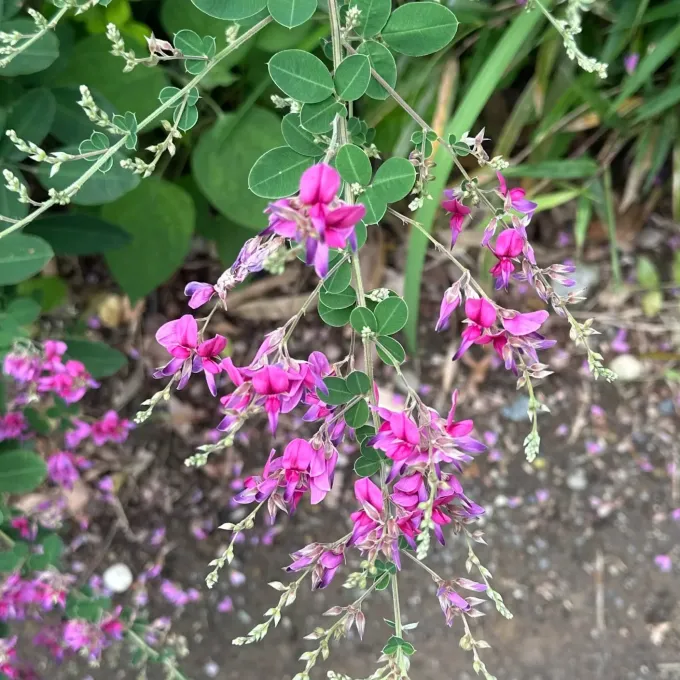
Description
Growing requirements
Lespedeza thunbergii, commonly known as Thunberg's bush clover, is a deciduous shrub belonging to the Fabaceae family. Originating from East Asia, this plant is valued in agriculture for its ability to fix nitrogen and its role as an ornamental and soil-stabilizing species.
The crop thrives in full sun but can tolerate partial shade, which is beneficial in hotter climates. It is highly adaptable to various soil types, provided there is excellent drainage, as the species is particularly sensitive to waterlogged environments that impede root health.
Regarding climate, Lespedeza thunbergii is relatively hardy. In colder regions, the aerial parts of the plant typically die back during winter, requiring pruning in early spring to encourage vigorous new growth that will produce abundant blossoms by late summer and autumn.
Botanically, it features arching stems that can reach significant heights, creating a fountain-like appearance. The leaves are trifoliate, and the plant produces dense, showy racemes of pink-purple flowers, making it an excellent source of forage for bees.
In agricultural practice, this plant is often utilized for erosion control on slopes and as a sustainable component in permaculture systems. Its deep root system helps in soil structural improvement, while its high nectar production provides essential forage for pollinators.
Main diseases and pests
Lespedeza thunbergii is generally considered a robust species with few major pathological concerns. The most frequent issues arise from poor environmental management, specifically excessive moisture, which can lead to fungal root rots or crown diseases.
Insect pests are typically not a major economic threat, although aphids may occasionally colonize the soft, succulent tips of new growth. Integrated pest management practices, such as maintaining plant health and encouraging natural predators, are usually sufficient to manage these risks.