
Lespedeza bicolor
Lespedeza bicolor
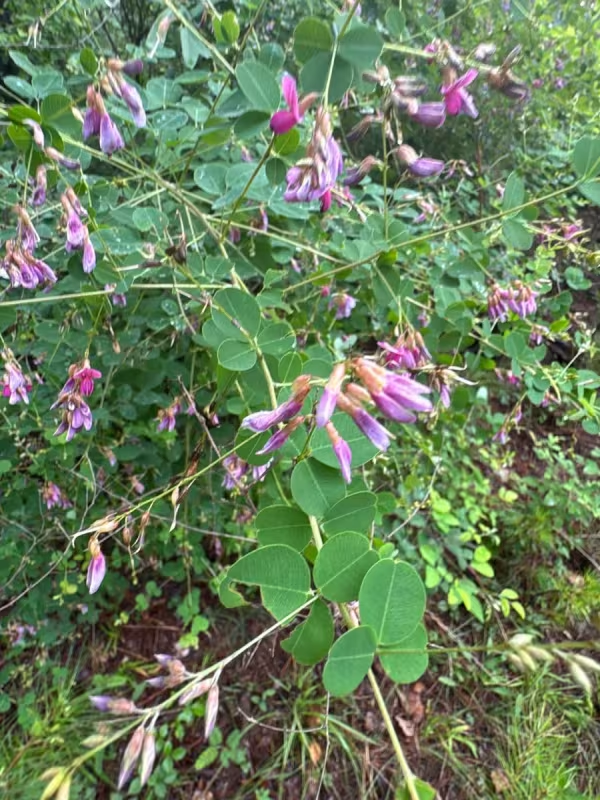
Description
Sowing dates
Sowing of Lespedeza bicolor is typically conducted in the spring when soil temperatures reach 10–12 degrees Celsius, ensuring adequate conditions for initial seed germination.
Seeds have a hard seed coat and require scarification prior to planting to ensure uniform emergence and to break physiological dormancy of the seed lot.
Planting depth should be kept shallow, between 1 to 2 centimeters, ensuring that seeds are pressed firmly into the soil to maintain moisture contact during the critical stage.
Seed rates vary depending on the target stand density, with 8–10 kilograms per hectare typically sufficient for establishing a productive forage or conservation field.
During the establishment year, growth is slow. It is essential to manage weed competition during this phase, as the young seedlings are not highly competitive against vigorous weeds.
Growing requirements
Lespedeza bicolor is a perennial legume shrub that demonstrates remarkable adaptation to low-fertility soils, including sandy and rocky terrain where other crops fail.
This species is highly drought-tolerant, making it an excellent choice for revegetation projects, soil stabilization on embankments, and reclamation of degraded landscapes.
It prefers sunny environments and does not thrive in heavily shaded areas. Sufficient light is vital for biomass production and the development of healthy reproductive structures.
The plant grows best in well-drained soils with pH levels ranging from slightly acidic to neutral. It is highly sensitive to waterlogging, which can cause significant root damage.
While the top growth may die back to the crown during harsh winters, the species is resilient and exhibits strong regrowth potential from the root system in the following spring.
Yield
The forage yield can reach 15–25 metric tons of green biomass per hectare, offering high-quality feed rich in protein, which is beneficial for livestock production systems.
Lespedeza bicolor is highly valued in apiculture as a late-season nectar source, filling the gap when other forage sources are depleted, thus boosting honey production.
The plant effectively fixes atmospheric nitrogen through symbiotic bacteria, contributing to soil fertility improvement and reducing the need for synthetic nitrogen fertilizers.
Seed yields range between 300 and 500 kilograms per hectare depending on site conditions, irrigation availability, and the health of the pollination population nearby.
The overall agricultural value is enhanced by its durability and low maintenance costs, making it a sustainable choice for long-term conservation and forage programs.
Main diseases and pests
The species is generally resistant to many common legume diseases; however, fungal leaf spots may emerge under conditions of high humidity or poor air circulation.
Insect pests such as beetles and weevils can damage foliage and flowers, though serious economic losses are rare unless infestations are severe and early in the season.
Late spring frosts present a significant threat to young shoots during the early development stage, potentially setting back growth and reducing the first cut biomass yield.
Invasive weeds remain the primary challenge during the establishment year. Without proper management, weeds can overwhelm the young stand, leading to total field failure.
Implementing integrated pest management practices and crop rotation strategies helps in minimizing the incidence of pathogens and sustaining long-term stand health.
Harvesting
Harvesting for green forage or hay should occur during the early flowering stage, as this timing balances total biomass volume with the highest nutritional density per unit.
For seed production, the harvest is timed when seed pods turn brown and dry. Careful monitoring is required to prevent pre-harvest losses due to natural pod shattering.
Mechanical harvesting utilizes standard grain equipment, though careful setting of combine speed and concave spacing is necessary to avoid damaging the small, fragile seeds.
After harvest, seeds must be cleaned and dried to a moisture content of approximately 12 percent to maintain viability and prevent spoilage during long-term storage.
Post-harvest residues serve as valuable organic matter, which can be incorporated into the soil to improve structure, water retention, and microbial activity for future crops.