
Lespedeza floribunda
Lespedeza floribunda
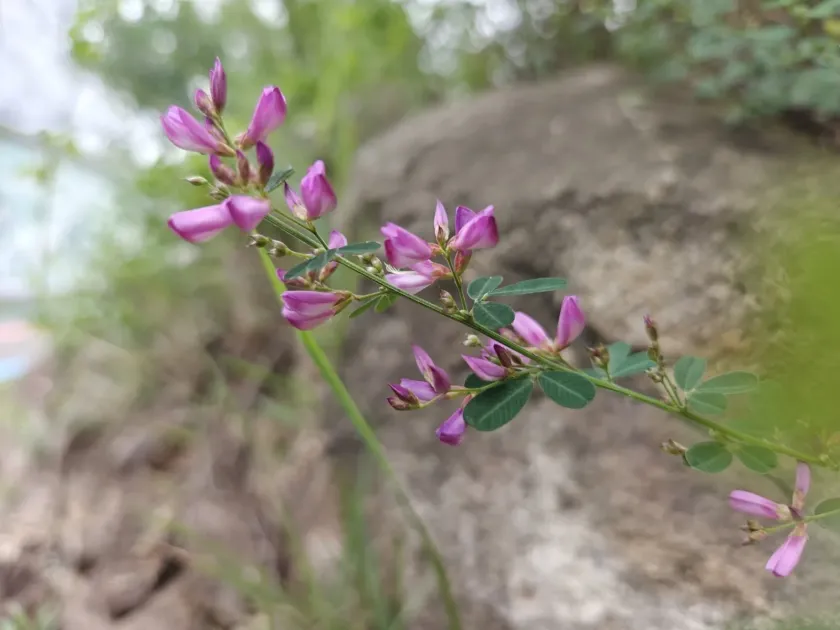
Description
Sowing dates
Lespedeza floribunda belongs to the Fabaceae family and is an important multi-purpose legume that requires specific preparation for successful establishment in the field.
Sowing should take place in late spring once the soil temperature is consistently above 10-12 degrees Celsius to ensure rapid germination and initial seedling development.
Scarification of seeds is a recommended agronomic practice because the naturally hard seed coat can lead to uneven germination rates if left untreated.
The seeds should be planted at a shallow depth of 1-2 centimeters, followed by light rolling to improve soil-to-seed contact, which is crucial for early moisture uptake.
Proper plant density is essential; therefore, calculating the seeding rate based on the intended use—whether for forage or soil restoration—is a key step for growers.
Growing requirements
This species thrives in well-drained soils, ranging from sandy loams to heavier clays, provided that there is no risk of waterlogging, which the plant cannot tolerate.
Lespedeza floribunda is a sun-loving plant that requires full exposure to maximize its photosynthetic potential and ensure the production of dense foliage and abundant flowers.
Once established, it exhibits remarkable drought tolerance due to its deep root system, making it an excellent candidate for regions with fluctuating rainfall patterns.
The ideal soil pH is neutral or slightly acidic; if the soil is too acidic, liming may be necessary to support the nitrogen-fixing bacteria associated with its roots.
While not heavily demanding, supplemental phosphorus and potassium fertilization during the planting phase can significantly boost the overall vigor of the crop.
Yield
The primary agricultural use of this plant is as a high-quality forage crop, providing a reliable source of protein for livestock during mid-to-late summer.
Average biomass yields vary based on soil fertility and climate, typically ranging from 15 to 25 tons of green matter per hectare under good management conditions.
Beyond forage, it serves as an excellent green manure crop, improving soil tilth and fertility by fixing atmospheric nitrogen and adding significant organic matter to the soil.
The longevity of this perennial legume makes it a cost-effective solution for permanent pastures, as it does not require frequent reseeding once a stand is established.
Seed production yields are generally lower, but the crop provides consistent output over several years, supporting its integration into diverse agricultural systems.
Main diseases and pests
Like most legumes, Lespedeza floribunda is susceptible to fungal diseases such as powdery mildew and various leaf spots, especially during seasons with high humidity.
Insects like aphids and certain types of weevils can cause significant damage to the plant's vegetative parts if pest populations are not monitored or controlled.
Preventative measures, such as maintaining optimal plant spacing to promote airflow, are the most effective way to minimize the need for chemical intervention.
Integrated pest management (IPM) strategies, including crop rotation and the encouragement of beneficial insects, should be prioritized over broad-spectrum pesticide use.
Field monitoring is necessary throughout the growing season to identify early signs of stress or infestation, allowing for targeted action before the damage spreads.
Harvesting
Forage harvesting should be timed to coincide with the early flowering stage, as this period offers the best balance between biomass volume and nutritional quality.
It is crucial to maintain a proper stubble height during mowing to allow for rapid regrowth, as this ensures the plant can recover effectively for subsequent cuts.
When harvesting for seeds, the crop should be processed when the pods have turned dark to prevent excessive shattering losses during mechanical collection.
Post-harvest management involves rapid drying to maintain seed viability and storage in cool, ventilated conditions to protect the crop from moisture and pathogens.
Efficient handling during the harvest process preserves the leaf fraction, which contains the highest concentration of digestible proteins and essential nutrients.