
Creeping bush clover
Lespedeza repens
Description
Growing requirements
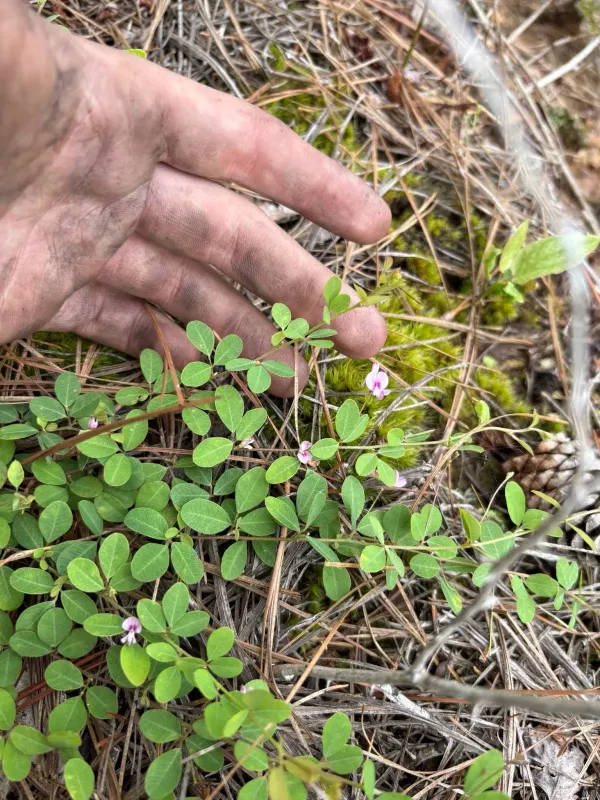
Creeping bush clover (Lespedeza repens) is a perennial herbaceous plant belonging to the Fabaceae family. This species is characterized by its prostrate growth habit, which allows it to thrive in grazed areas and marginal land.
Native to North America, it is commonly found in dry, open woods and sunny slopes. The plant is highly valued for its ability to fix nitrogen, contributing significantly to soil enrichment in natural and managed landscapes.
The crop prefers well-drained, acidic to neutral soils and exhibits excellent drought tolerance. These characteristics make it a robust choice for planting in areas with poor fertility where other forage legumes struggle to survive.
Sunlight exposure is a critical factor for successful growth; therefore, the crop should be managed in open areas rather than heavily shaded woodlands. It is well-adapted to the temperate climate of its native range.
In terms of agricultural utility, it serves as a valuable ground cover for erosion control and a nutritional supplement in pasture systems. Its presence helps improve the overall biodiversity and feed quality for livestock.
Main diseases and pests
The primary threats to Lespedeza repens include fungal infections like powdery mildew, which can spread rapidly under high humidity conditions.
Various insect pests, including weevils and aphids, may target the foliage and reproductive structures, potentially affecting the plant's health and seed production.
Competition from aggressive invasive weeds can suppress seedling establishment if proper land management practices are not followed during the first season.
Root rot pathogens may become problematic if the crop is planted in poorly drained soil where moisture levels remain consistently high.
Overgrazing poses a risk to the persistence of the crop, as continuous defoliation can weaken the root system and deplete carbohydrate reserves needed for winter survival.