
Hairy lespedeza
Lespedeza pilosa
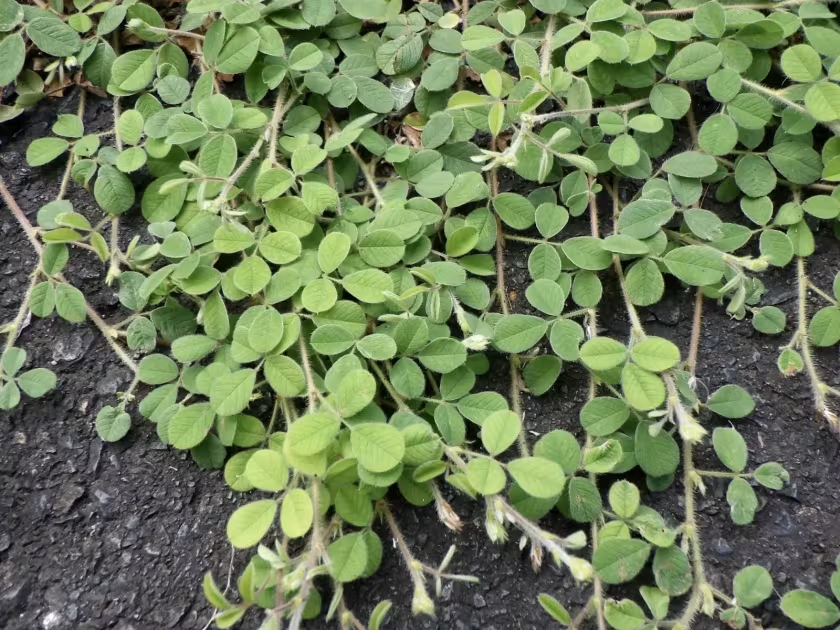
Description
Sowing dates
Sowing of hairy lespedeza should ideally occur in the spring once the soil has warmed up and the risk of frost has passed. Depending on regional climatic conditions, the optimal timeframe is usually late April through mid-May.
The seeds of this crop are known for their physical dormancy, so scarification is required before sowing to improve germination rates. Seeds should be planted at a shallow depth of 1–2 centimeters, as they do not thrive when buried deeply.
To establish a dense stand, seeding rates must be adjusted based on soil type and the intended use of the crop. When grown for seed production, row spacing can be set at 30–45 centimeters, while broadcast or standard row seeding is preferred for pasture establishment.
Rolling the soil immediately after planting is a vital step to ensure good seed-to-soil contact, which is critical for achieving uniform emergence, especially in areas prone to topsoil drying.
As hairy lespedeza is relatively slow-growing during the first year, maintaining weed-free conditions during the early growth stages is essential for the healthy development of young seedlings.
Growing requirements
Belonging to the Fabaceae family, this plant is highly valued for its ability to thrive in poor, sandy, and acidic soils. It is frequently used for phytoremediation and stabilizing eroded landscapes.
The crop prefers well-lit areas, as shade can significantly hinder vegetative growth and biomass accumulation. However, it displays remarkable drought tolerance due to its deep and extensive root system.
Hairy lespedeza performs best in soil with a pH ranging from slightly acidic to neutral. Despite its resilience, optimal yields are achieved in well-drained sandy loam soils where waterlogging is prevented.
The plant demonstrates good cold tolerance and can successfully survive winter provided the soil does not remain saturated for extended periods, making it a viable crop for various temperate climates.
Agrotechnical management should include minimal phosphorus and potassium fertilization during establishment. Once established, the crop naturally improves soil fertility through nitrogen fixation via symbiotic bacteria.
Yield
Hairy lespedeza is primarily utilized for green fodder, hay production, and as a component of grazing pastures. Biomass yield is highly dependent on stand density and the overall quality of soil management.
Under intensive management, lespedeza can support up to two cuttings per season. The first harvest is ideally timed during the budding phase to maximize the nutritional value of the harvested biomass.
Hay produced from lespedeza is rich in protein and is readily consumed by livestock, including cattle and sheep. Its nutritional profile remains high even when utilizing the more fibrous stems.
Beyond its forage potential, the crop serves as a valuable honey plant, providing a late nectar flow for apiaries. The intensity of the flowering period directly correlates with honey production efficiency.
The crop possesses an excellent ability to regenerate after cutting, allowing for productive stand longevity of 5–7 years when managed with appropriate harvesting practices.
Main diseases and pests
Hairy lespedeza is generally robust and resistant to most common agricultural diseases, though fungal infections can occur in conditions of excessive moisture and poor drainage.
Root rot is the most common issue, typically triggered by heavy, waterlogged soils with insufficient aeration. Maintaining proper drainage and avoiding soil compaction are the best preventative measures.
Leaf-feeding insects and weevils pose the greatest pest risk, particularly during the active growing season. Regular field monitoring is necessary to detect and mitigate any localized outbreaks.
Orthoptera (grasshoppers) can occasionally cause damage, especially in dry years when they migrate to succulent legume fields. Biological control methods are often the preferred approach for managing these pests.
Disease prevention is best achieved through sound crop rotation practices and avoiding over-seeding, which ensures adequate air circulation within the stand and reduces the prevalence of fungal pathogens.
Harvesting
Harvesting green biomass should be performed with a mower adjusted to a cutting height of at least 5–7 centimeters to allow for healthy regrowth. Cutting too low can weaken the plant and reduce future yields.
For hay production, a swathing method is used to allow for proper wilting. It is important to avoid over-drying, which can lead to leaf shatter, causing a significant loss of vitamins and nutrients.
Seed harvest is conducted when the pods reach maturity and change color. Direct combining is recommended to minimize field losses that often occur with windrow harvesting methods.
Post-harvest seed processing includes cleaning and drying the seeds to a moisture content of 12–14 percent to ensure safe storage in warehouses and maintain long-term viability.
Seeds must be stored in dry, well-ventilated areas, ideally in breathable bags to protect them from pests and excessive humidity, ensuring high germination percentages for the next planting season.