
Lespedeza japonica
Lespedeza japonica
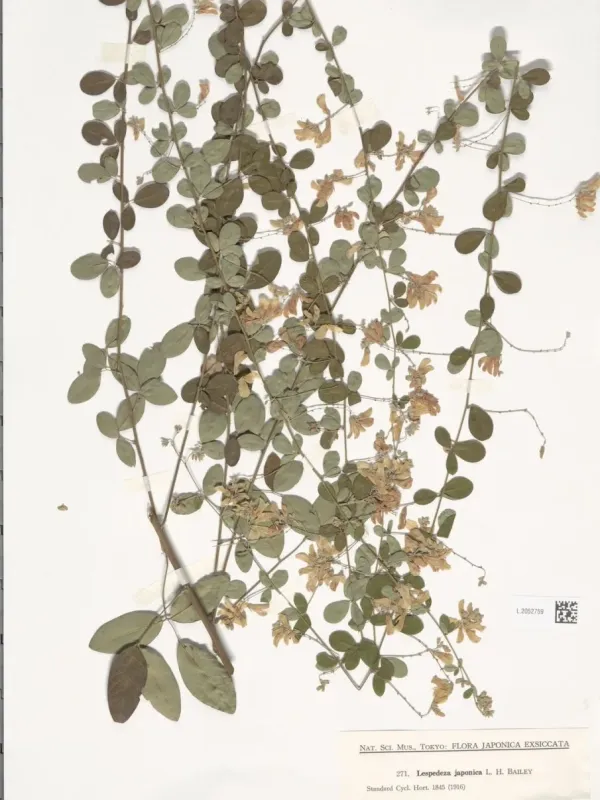
Description
Sowing dates
Sowing of Lespedeza japonica is primarily carried out in the spring, once the soil temperature reaches 10-12 degrees Celsius. The seeds require preliminary scarification to increase germination rates due to their hard coating.
The sowing depth is typically 1-2 centimeters, depending on the soil texture. Ensuring good seed-to-soil contact is essential for uniform emergence of the seedlings.
Seeding rates vary depending on the intended use: higher for hay production and lower for seed harvesting. With row planting, the spacing is kept at approximately 15-20 centimeters for optimal root development.
The crop is characterized by slow development in the early vegetative stages, making weed control in the first few months after sowing a critical management practice.
In cooler climates, early spring planting is preferred to allow the plant to establish a robust root system before the onset of autumn frosts.
Growing requirements
Lespedeza japonica belongs to the Fabaceae family and is valued for its ability to improve soil fertility through symbiosis with nitrogen-fixing bacteria.
The plant exhibits high drought tolerance, which allows it to be cultivated on light, sandy, or loamy soils that may be unsuitable for other forage grasses.
The crop is light-demanding and prefers open sites; it does not tolerate prolonged shading, which significantly reduces biomass and seed production.
The optimal pH range for successful growth varies from slightly acidic to neutral. Liming is necessary if the soil is highly acidic prior to establishment.
While the plant can withstand short periods of drought, consistent moisture levels during the flowering phase are required for maximum green biomass yields.
Yield
The biomass yield of Lespedeza japonica depends on soil fertility and management practices, typically ranging from 15 to 30 tons per hectare.
Seed harvesting requires careful timing, as maturity is uneven; the optimal period is when most of the pods have turned a dark color.
Beyond biomass, Lespedeza is highly valued as a nectar source, providing bees with food in late summer when many other primary honey plants have already finished blooming.
The forage quality is excellent, as the leaves are rich in proteins, vitamins, and minerals, making it a valuable addition to hay mixtures.
Practical uses also include the stabilization of eroded slopes and land reclamation, where the crop forms a dense, protective soil cover.
Main diseases and pests
The main threats to the crop include fungal diseases, such as powdery mildew, which can occur under conditions of high humidity and overcrowded planting.
Among pests, weevils cause the most significant damage by attacking vegetative parts and generative organs, ultimately reducing seed viability.
Aphids can also cause damage by sucking sap from young shoots, weakening the plant and potentially facilitating the spread of viral pathogens.
To prevent the spread of pests, it is recommended to implement proper crop rotation and perform timely phytosanitary weeding.
Disease prevention focuses on the use of high-quality, certified seeds and maintaining optimal plant density within the field to ensure adequate airflow.