
Hairy lespedeza
Lespedeza hirta
Description
Growing requirements
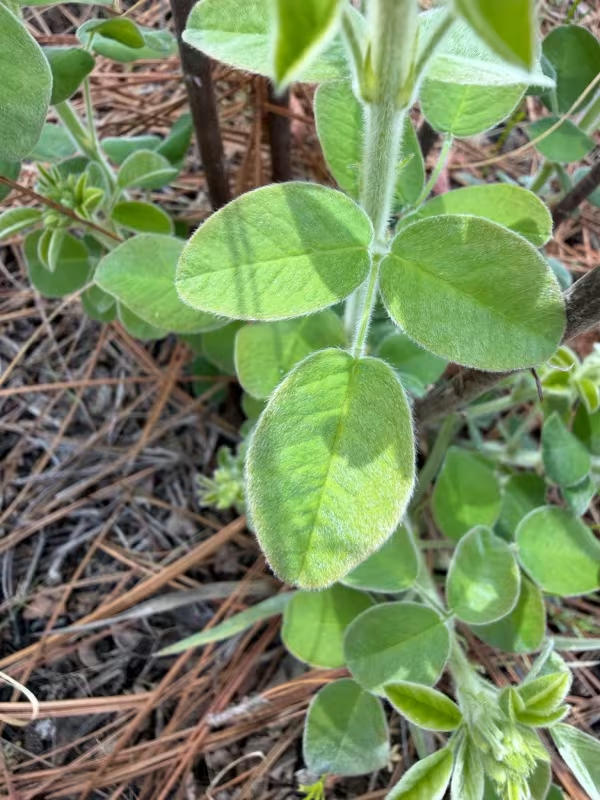
Hairy lespedeza (Lespedeza hirta) is a perennial herbaceous plant belonging to the Fabaceae (legume) family. Native to North America, it is widely recognized for its robust growth in arid and challenging environments.
Botanically, the plant is distinguished by its upright stems covered in dense, coarse hairs, which give the plant its characteristic rough texture. Its root system is deep and expansive, making it an excellent candidate for soil stabilization.
The crop thrives in well-drained, sandy, or rocky soils and is highly adapted to nutrient-poor sites. Its ability to fix atmospheric nitrogen improves soil health, making it an ideal choice for restoring degraded farmland.
In terms of climatic requirements, Hairy lespedeza prefers open, sunny areas. It exhibits remarkable drought tolerance, allowing it to maintain growth during periods when other forage species might suffer from water deficiency.
Maintenance is relatively low, focusing on site preparation and initial weed control during the seedling stage. Once established, the plant is hardy and competitive against invasive weed species.
Harvesting
Hairy lespedeza is primarily utilized for erosion control on slopes and as a sustainable forage crop. It also serves as a crucial habitat and food source for various pollinator species and native wildlife.
Harvesting for forage is best performed during the flowering phase to ensure optimal nutritional content. Early harvesting prevents the plant from becoming excessively woody, ensuring better digestibility for livestock.
When harvesting seeds, timing is critical as the small seed pods tend to shatter easily upon maturity. Specialized machinery or careful manual harvesting is recommended to minimize yield loss during this period.
After collection, the plant material should be thoroughly dried to prevent the onset of fungal diseases. Proper ventilation during the drying process is essential to maintain the quality of both seeds and forage.
Storage requires cool, dry conditions to ensure longevity of the seeds. By avoiding high-humidity environments, producers can maintain high germination rates for future planting seasons.