
Lepechinia calycina
Lepechinia calycina
Description
Growing requirements
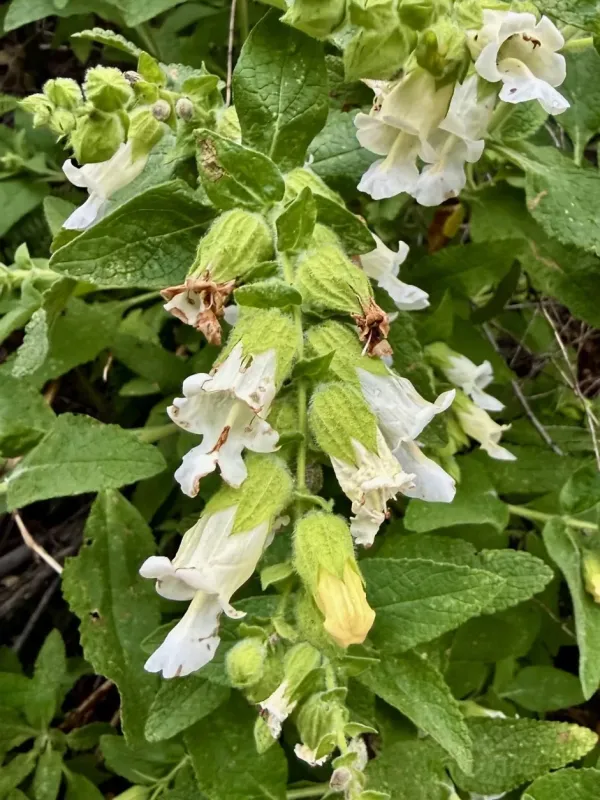
Lepechinia calycina, commonly known as the California pitcher sage, is a perennial shrub belonging to the Lamiaceae family. Native to the mountainous regions of California, this species is well-adapted to Mediterranean climates characterized by hot, dry summers and mild winters.
The plant features distinctively fuzzy, aromatic foliage and produces attractive white to pale pink flowers with prominent calyces. These structural adaptations allow the species to thrive in dry, sun-drenched environments where other garden plants might struggle.
Cultivation requirements focus heavily on soil drainage. It thrives in loose, rocky, or sandy substrates that prevent water stagnation. The plant performs best in full sun, though it may tolerate light shade during the hottest parts of the day in inland areas.
Regarding water management, Lepechinia calycina is drought-tolerant once established. Overwatering is the most common cause of failure in domestic gardens, as the root system requires significant oxygen levels and a well-aerated medium to remain healthy.
The plant is highly valued in xeriscaping projects for its low maintenance needs and ability to integrate into sustainable landscapes, providing both aesthetic appeal and a source of fragrant oils typical for the genus.
Main diseases and pests
Root rot remains the most significant threat to Lepechinia calycina. This fungal issue is almost exclusively caused by excessive moisture levels in the soil or poor drainage systems. Proper site selection and drainage preparation are essential.
Pests such as spider mites and whiteflies can infest the plant, particularly in sheltered areas with poor air circulation. Regular monitoring of the foliage is recommended to catch infestations before they spread significantly.
Powdery mildew can manifest in humid or stagnant environments, leading to unsightly white patches on the leaves. Thinning out branches to improve airflow is a standard preventative measure against this pathogen.
Garden pests like slugs and snails may target young seedlings in the spring. Implementing physical barriers or organic bait traps around the perimeter can effectively protect young plants during their vulnerable growth phase.
Overall, maintaining plant vigor through appropriate spacing and avoiding excessive fertilizers is the best defense. Excess nitrogen can encourage soft growth that is more susceptible to both pests and fungal diseases.