

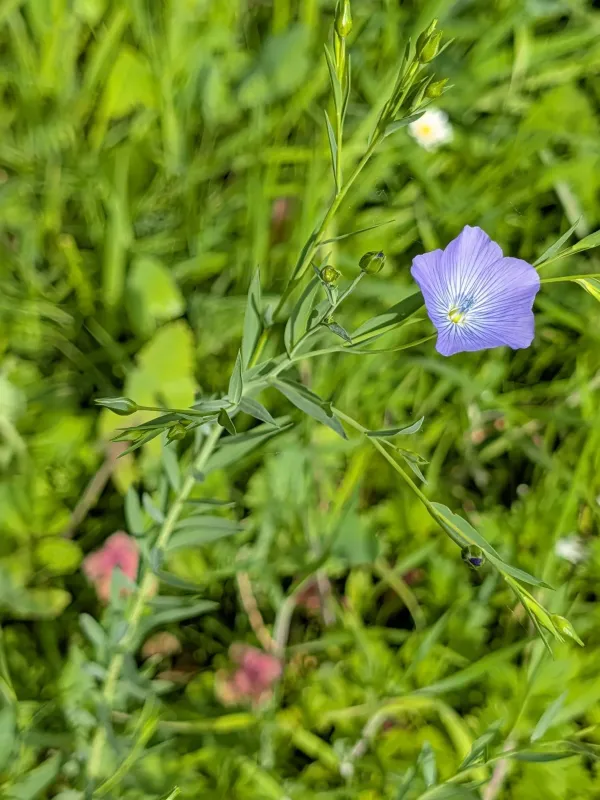
Description
Sowing dates
Flax (Linum usitatissimum L.) is an annual herbaceous plant of the Linaceae family, cultivated for both its fiber and its oil-rich seeds. The crop requires a finely prepared, level seedbed to ensure uniform seeding depth, which is critical for even emergence.
Sowing typically begins when soil temperatures at a 10 cm depth reach +7...+9 °C. Early planting allows the crop to utilize spring moisture effectively and develop a robust root system before the onset of high summer temperatures.
Seeding rates vary significantly based on the intended use: fiber flax requires higher densities compared to oilseed varieties. The optimal planting depth is 1.5–3 cm, which facilitates rapid and uniform germination across the field.
Weed management is a vital aspect of flax agronomy, as the crop is a poor competitor in its early stages. Integrated pest management, including herbicide application or mechanical weeding, is necessary to prevent yield loss during the early vegetative phase.
Flax is a classic cool-season crop with a short but intensive growth cycle. Historically, it is one of the oldest domesticated plants, originating from the Mediterranean region and spreading globally due to its versatile applications.
Growing requirements
Flax thrives in well-aerated, loamy, or sandy-loam soils with a neutral or slightly acidic pH. Waterlogged areas or heavy clay soils are detrimental, often leading to increased root rot and stunted plant growth.
The crop is highly sensitive to water availability, especially during the branching and flowering stages. Moisture stress during the budding phase significantly reduces both seed yield and fiber quality.
Light intensity is a key driver for flax, as it is a long-day plant. Abundant sunshine enhances photosynthesis and encourages the accumulation of linolenic acid in the seeds of oilseed varieties.
Moderate temperatures are ideal; the optimum range for active growth is +16...+18 °C. Temperatures exceeding +25 °C, combined with moisture deficits, often cause the crop to enter premature senescence.
Nutrient management must be balanced; excessive nitrogen can lead to lodging, which complicates harvesting and reduces fiber value. Adequate phosphorus and potassium levels are essential for plant immunity and fiber strength.
Yield
Yield varies based on the variety and management practices, typically ranging from 0.8 to 1.5 tonnes of seeds per hectare. Under optimal conditions and professional management, yields can exceed 2.5 tonnes.
For fiber flax, the yield of retted straw is evaluated, which correlates directly with plant stand density and soil fertility. Fiber purity and length are the primary quality indicators for industrial use.
Oil content in flaxseed usually ranges from 35% to 45%, depending heavily on weather conditions during the seed-filling period. The stability of oil quality is largely determined by moderate temperatures during maturation.
Modern breeding programs focus on varieties that combine high seed yield with strong lodging resistance. This allows for increased mechanization in planting and harvesting, improving overall farm profitability.
The economic viability of flax production is supported by steady demand for natural fibers in textiles and high-quality linseed oil in both food and industrial manufacturing sectors.
Main diseases and pests
Flax is susceptible to various fungal pathogens that can devastatingly impact yields if left unmanaged. Early detection and chemical intervention are essential for maintaining crop health throughout the season.
Key diseases affecting the crop include:
- Alternaria blight, Rhizoctonia, Sclerotinia
- Pythium root rot, Septoria
- Rust, Fusarium wilt
Among pests, the flax flea beetle is the most significant threat, capable of destroying young seedlings in a very short time. Seed treatments are commonly used as a preventative measure against these early-season pests.
Other pests, such as the cereal leaf beetle and various bugs, target vegetative parts, reducing the plant's overall vigor. Scouting and timely insecticide applications remain the standard for control.
An integrated approach to crop protection includes using resistant cultivars, implementing long rotations (6–7 years between flax crops), and utilizing systemic fungicide programs to mitigate disease pressure.
Harvesting
Harvesting is a critical operation where timing determines final product quality. For oilseed flax, the optimal window is when the majority of the bolls have turned brown.
The harvesting method depends on the crop type: fiber flax is pulled to preserve stalk length, while oilseed flax is harvested using direct combining techniques.
Avoiding over-ripening is crucial, as delayed harvest leads to seed shattering and fiber degradation due to weathering. Seed moisture content at harvest should not exceed 12–14% to ensure safe storage.
Post-harvest conditioning includes cleaning and drying seeds to prevent mold growth and heating. Proper temperature control during drying is vital to maintain seed viability and prevent oil oxidation.
Flax straw, after seed removal, often undergoes a retting process in the field, where moisture and microorganisms break down pectin to release the fibers from the stem core.
In brief
14
Crop diseases
9
Crop pests
Content graph
Crop diseases · 14
Content graph
Crop pests · 9
Content graph
Connections · Flax
Most often together:
Marketplace
Products · 15
All 15
Herbicides, Desiccants 397
Fungicides 24
Fertilizers 15
Insecticides, Acaricides 12
Plant Growth Regulators 3
Biological Products 1
Adjuvants 1

Phosphorite flour from the Yegoryevskoye phosphorite deposit, granular
Sumsky NDI "Mindiip"
Fertilizers
0
0
·
661
1 offer
0.13 €per 1 kg
Buy


AZOPŁON Nutri
Grupa Azoty Zakłady Azotowe Chorzów S.A.
Fertilizers
0
0
·
46
1 offer
3.63 €per 1 kg
Buy


AZOPLON Micro (AZOPLON Micro)
Grupa Azoty Zakłady Azotowe Chorzów S.A.
Fertilizers
0
0
·
40
3 offers
3.1 €per 1 kg
Buy

NitroBio-C, granular mixture
North Donetsk Azot Union, LLC
Fertilizers
0
0
·
451
No offers
—
Details



AZOPLON Nutri (AZOPLON Nutri)
Grupa Azoty Zakłady Azotowe Chorzów S.A.
Fertilizers
0
0
·
40
No offers
—
Details
