
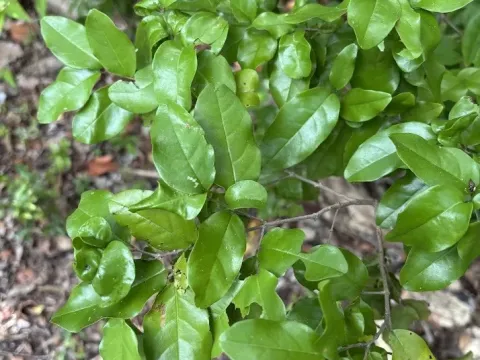
Krugiodendron
Krugiodendron
Krugiodendron ferreum, commonly known as the black ironwood, is a species of flowering tree in the buckthorn family, Rhamnaceae. It is native to the Caribbean, Mexico, and Central America.
What the section contains

Krugiodendron
The species thrives in well-drained, limestone-based soils and rocky terrain, which are common within its natural range. It is remarkably adapted to survive in harsh conditions with limited water availability.
Climatic requirements are primarily tropical, necessitating high year-round temperatures. The tree is heliophilic and requires direct sunlight to achieve its characteristic dense, slow-growing structure.
Botanically, it is classified as an evergreen tree known for producing one of the heaviest and densest woods in the world, which is highly resistant to natural decomposition and decay.
Agricultural management is limited by the slow growth rate of the species, making it more suitable for long-term conservation and niche forestry rather than intensive plantation farming.
The primary threat to Krugiodendron is overharvesting, as its extreme wood density made it a historical target for timber production, leading to the depletion of mature stands.
Natural pests are generally minimal due to the physical hardness of the wood, which acts as a deterrent for many wood-boring insects and traditional timber pests.
Pathological risks include root rot, which may manifest if the soil environment fails to provide adequate drainage, especially during unseasonably wet periods.
Environmental threats also include land degradation and deforestation, which destroy the micro-habitats required for the tree's natural recruitment and seedling survival.
Effective management requires protecting young trees from encroachment by faster-growing invasive vegetation and ensuring that initial planting conditions mimic the dry, rocky outcrops of their origin.