
Alocasia sanderiana
Alocasia sanderiana W. Bull
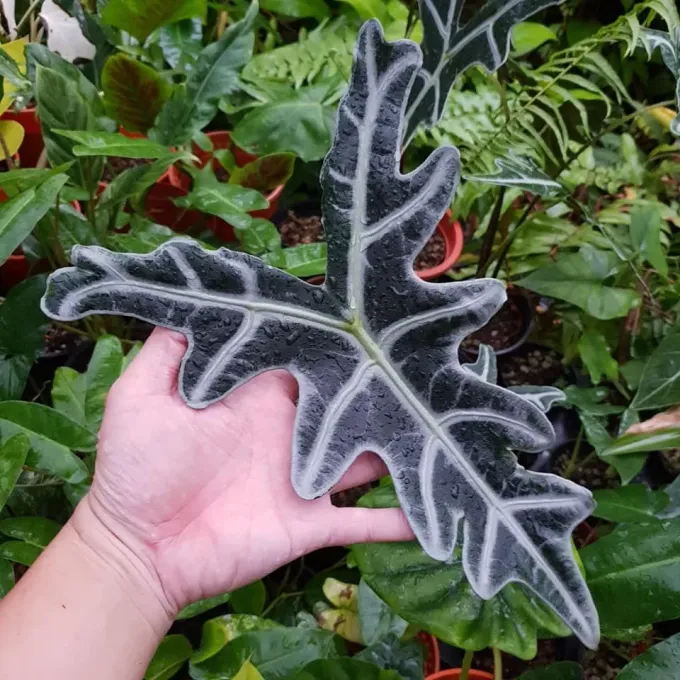
Description
Growing requirements
Alocasia sanderiana is a striking herbaceous perennial belonging to the Araceae family. Native to the tropical rainforests of Mindanao in the Philippines, this species is highly valued for its distinct, deeply lobed leaves with metallic silver veins.
To ensure optimal development, the plant requires a warm climate with temperatures consistently ranging from 20°C to 26°C. It is extremely intolerant of cold drafts and sudden drops in temperature, which can cause significant tissue damage.
The ideal soil substrate should be loose, well-draining, and rich in organic matter. A mixture of peat moss, perlite, and pine bark is recommended to promote root respiration and prevent waterlogging, which the plant cannot tolerate.
High relative humidity, ideally between 70% and 80%, is essential for the healthy growth of Alocasia sanderiana. Growers often use humidifiers or pebble trays to maintain these specific atmospheric conditions in controlled environments.
The botanical structure of the plant features distinct, arrowhead-shaped leaves that can reach substantial sizes. The contrast between the dark green surface and the shimmering silver venation makes it one of the most sought-after species in the genus Alocasia.
Main diseases and pests
The primary pests affecting Alocasia sanderiana include spider mites, mealybugs, and scale insects. These pests often congregate on the undersides of the leaves, drawing sap and weakening the plant's structural integrity.
Overwatering remains the most critical threat, leading to root rot and other systemic fungal infections. Once the root system is compromised, the plant struggles to transport nutrients, resulting in rapid leaf yellowing and necrosis.
Effective pest management involves the regular application of horticultural oils or systemic insecticides when infestation is confirmed. It is crucial to monitor the plants frequently to detect issues during the early stages.
Fungal infections can be mitigated by ensuring proper air circulation and keeping the foliage dry. If rot is present, the affected parts must be surgically removed, and the remaining healthy roots should be treated with a fungicide.
Preventive care is key to managing the health of this delicate crop. Consistent monitoring, usage of sterile planting materials, and maintaining optimal environmental parameters significantly reduce the incidence of biological threats.