
Alocasia brancifolia
Alocasia brancifolia (Schott) A. Hay
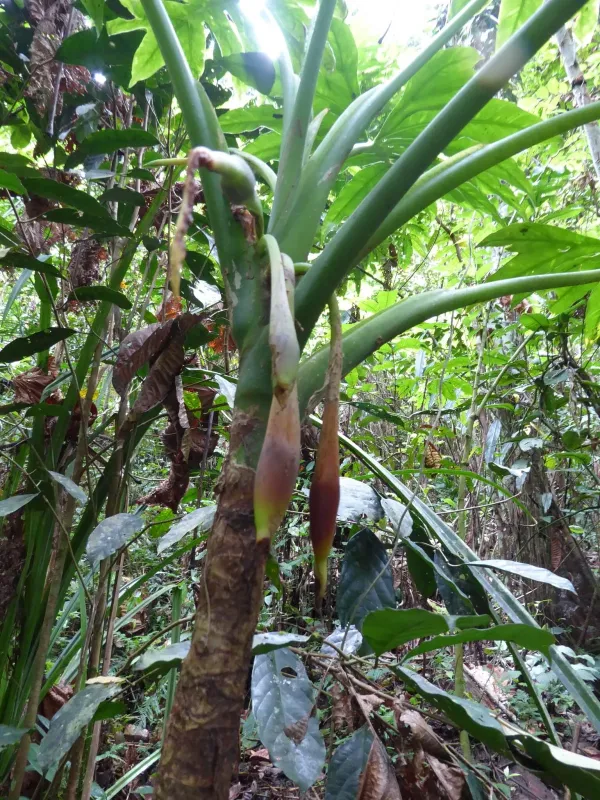
Description
Growing requirements
Alocasia brancifolia is an exotic perennial herbaceous plant belonging to the Araceae family. This species is native to the tropical rainforests of New Guinea, where it thrives in warm, humid, and shaded environments under the dense forest canopy.
The plant is highly valued by horticulturists for its distinctive, deeply lobed leaf blades that provide a unique texture. Unlike more common species, its foliage has a delicate, almost fern-like appearance that adds an architectural element to any collection.
Climate requirements for this species are strict: it demands stable temperatures between +20°C and +26°C. It is particularly intolerant of cold drafts and sudden changes in climate, which can cause significant physiological stress to the plant.
Soil composition must be loose, porous, and nutrient-rich to ensure proper gas exchange for the roots. A mixture of orchid bark, peat, perlite, and charcoal is often recommended to mimic its natural epiphytic-like growing conditions.
Lighting should be bright and indirect, as direct sunlight causes irreversible tissue damage. If kept indoors, it is best placed near an east-facing window or under artificial LED grow lights to maintain consistent and healthy development.
Main diseases and pests
The most significant threat to Alocasia brancifolia is root rot, typically caused by overwatering and inadequate drainage. If the soil remains saturated for too long, the plant’s corm will quickly succumb to fungal pathogens.
Spider mites are a persistent pest, especially in environments with low humidity levels. Regular inspection of the undersides of the leaves is necessary to detect infestation early and apply appropriate mechanical or biological control measures.
Mealybugs can also infest the plant, hiding in the junctions of leaf petioles and the main stem. These should be manually removed or treated with horticultural oils to prevent them from spreading across the foliage.
Anthracnose and other bacterial leaf spots can occur when humidity is too high without proper air circulation. Maintaining a gentle breeze in the growing area helps prevent moisture from lingering on the leaf surfaces for extended periods.
Patience and observation are key to successfully growing this rare aroid. By monitoring the soil moisture and keeping pests at bay, the plant can thrive and produce its signature intricately shaped foliage for many years.