
Brisbane taro
Alocasia brisbanensis (F. M. Bailey) Domin
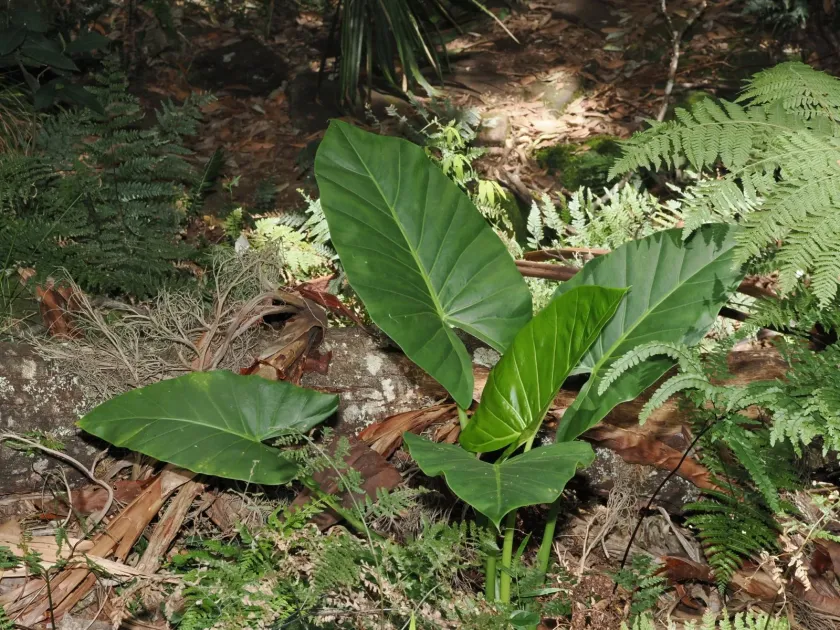
Description
Growing requirements
Brisbane taro (Alocasia brisbanensis) is a member of the Araceae family. It is a robust perennial herb native to the tropical rainforests of eastern Australia, where it thrives in shaded, humid environments.
The plant features large, glossy, arrow-shaped leaves supported by thick, succulent petioles. As a rhizomatous plant, it utilizes its underground storage organ to endure seasonal changes in rainfall and maintain physiological stability.
Climate requirements include warm temperatures throughout the year, ideally between 20°C and 28°C. It is intolerant of frost and cold winds, which can cause significant tissue damage or dormancy.
Soil conditions must focus on excellent aeration and drainage. A nutrient-rich, well-draining potting medium containing bark, peat moss, and perlite is essential to prevent root asphyxiation in the pot.
Cultural practices include providing bright, indirect light to maximize foliage production. While it can survive in lower light, its growth rate and leaf size will be significantly reduced under such conditions.
Main diseases and pests
Common pests affecting Alocasia brisbanensis include spider mites and mealybugs, which are often encouraged by dry indoor environments and stagnant air circulation.
Root rot is the most devastating disease, typically caused by overwatering or using heavy, non-draining soil mixes that trap moisture around the rhizome.
Fungal leaf spot diseases can affect the plant if moisture levels remain too high on the leaf surface for prolonged periods without sufficient airflow.
Scale insects can also be a challenge, adhering to the undersides of leaves and stems, and extracting sap, leading to yellowing and stunted growth.
Integrated pest management, including physical removal of pests and judicious use of biological controls, is recommended for maintaining plant health in agricultural settings.