
Alocasia azlanii x baginda
Alocasia azlanii K. M. Wong & P. C. Boyce x A. baginda Kurniawan & P. C. Boyce
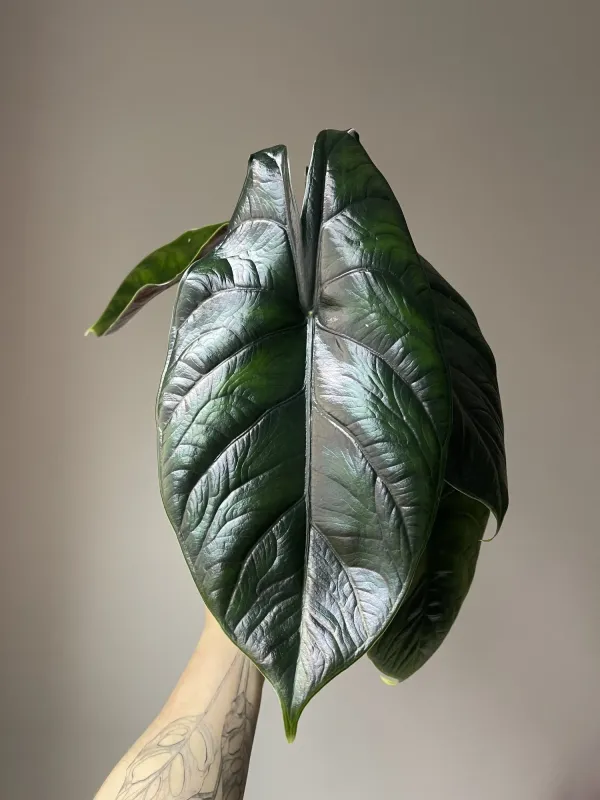
Description
Growing requirements
Alocasia azlanii x baginda is a sophisticated interspecific hybrid within the Araceae family, highly prized by collectors for its unique foliage texture and striking metallic coloration. This plant thrives in environments that replicate its native tropical habitat, necessitating high humidity levels, ideally above 70%.
Optimal growth is achieved at temperatures between 22°C and 28°C. It is crucial to prevent exposure to cold drafts and sudden temperature fluctuations, as these factors can cause immediate leaf drop and stress to the root system.
The plant requires bright, indirect light to maintain its vibrant leaf pigmentation. Exposure to direct sunlight must be strictly avoided, as the delicate foliage is highly prone to scorching, which ruins the aesthetic value of the plant.
A well-draining, airy substrate is mandatory for healthy development. A mix consisting of orchid bark, perlite, coco chips, and high-quality peat is recommended to provide optimal aeration and moisture regulation for the rhizome.
Watering should be balanced; the substrate should remain slightly moist but never waterlogged. Using self-watering pots or specific inorganic substrates like leca can help manage the moisture levels more effectively in home conditions.
Main diseases and pests
Spider mites represent the primary threat to Alocasia azlanii x baginda, as they thrive in the same warm, indoor conditions favored by the plant, often leading to rapid infestation.
Mealybugs and scale insects may also infest the plant, typically colonizing the tight crevices around the petioles and the base of the main stem.
Bacterial leaf spot can occur if water sits on the leaves for too long in a poorly ventilated environment, leading to unsightly dark lesions on the foliage.
Root rot remains the most common fatal issue, typically triggered by overwatering or using a potting medium that lacks sufficient drainage and oxygenation.
Regular monitoring of leaf undersides and the implementation of a proactive integrated pest management strategy are essential for maintaining the health of this delicate specimen.