
Alocasia infernalis
Alocasia infernalis P. C. Boyce
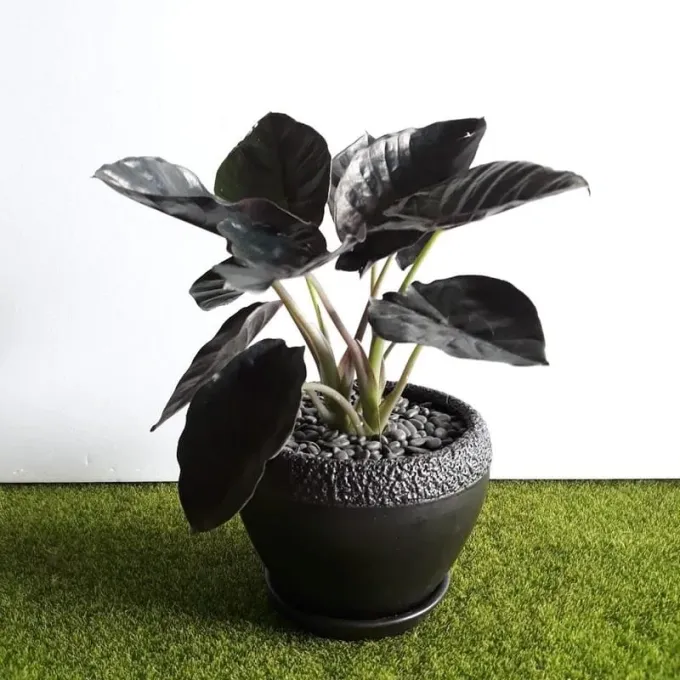
Description
Growing requirements
Alocasia infernalis is a striking member of the Araceae family, native to the tropical rainforests of Borneo, specifically found growing in limestone karst environments.
This species is highly prized for its unique foliage, which features deep, metallic purple-to-black leaves that maintain a stiff, leathery texture throughout their lifecycle.
Successful cultivation requires consistent warmth, ideally maintaining temperatures between 22 and 28 degrees Celsius, while avoiding any significant fluctuations or cold drafts.
The plant demands a highly specialized, well-draining substrate mix, often composed of high-quality peat, perlite, bark, and charcoal to replicate its natural rocky habitat.
High humidity levels of at least 70 percent are essential for optimal health, along with bright, indirect lighting conditions to prevent the dark leaves from bleaching or burning.
Main diseases and pests
The most common pests affecting this Alocasia species are spider mites, which thrive in dry environments and can quickly damage the delicate leaf tissues.
Root rot, caused by overwatering or poorly aerated soil, remains the primary threat, as it can lead to the rapid decline and death of the plant's root system.
Fungal infections such as Phytophthora can occur if the plant remains in stagnant water, necessitating careful monitoring of the moisture levels in the pot.
Effective management involves maintaining proper airflow around the foliage and ensuring the potting medium is allowed to dry slightly between watering cycles.
Regular visual inspections are critical to detect early signs of pest activity, allowing for swift treatment with appropriate miticides or gentle neem oil solutions.