
Alocasia Baginda
Alocasia baginda Kurniawan & P. C. Boyce
Description
Growing requirements
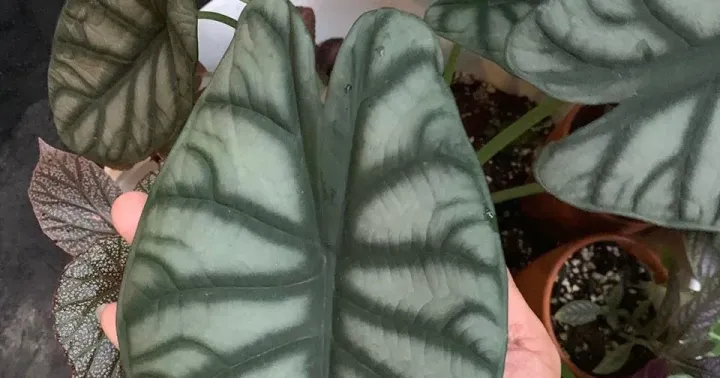
Alocasia Baginda (Alocasia baginda) is a perennial plant belonging to the Araceae family. Native to the tropical forests of Kalimantan, Indonesia, it is prized in horticulture for its distinct metallic-grey to green foliage and textured veins.
The plant requires a stable tropical climate with temperatures ranging from 20°C to 28°C. It is highly sensitive to cold drafts, which can lead to permanent damage to the leaf structure or complete dormancy of the plant.
Regarding soil requirements, this species demands an exceptionally well-draining, airy substrate. A standard mix for this crop includes orchid bark, perlite, and high-quality peat moss, maintaining a pH level between 5.5 and 6.5.
Proper agronomic care involves high humidity levels, ideally above 70%. Watering should be done carefully; the growing medium should be kept moist but never waterlogged to ensure the health of the tuber and root system.
This crop is primarily used in commercial greenhouse production and the high-end ornamental plant trade. Due to its slow growth rate, it is often treated as a premium collector's item within the indoor gardening industry.
Main diseases and pests
The most common pests affecting Alocasia Baginda are spider mites, especially during dry indoor conditions, and mealybugs, which tend to hide in the axils of the leaves.
Disease management focuses on preventing fungal and bacterial infections. Root rot is the primary threat, typically caused by over-watering or using a medium with poor aeration that keeps the roots in a swampy environment.