
Kalanchoe uniflora
Kalanchoe uniflora (Stapf) Raym.-Hamet
Description
Growing requirements
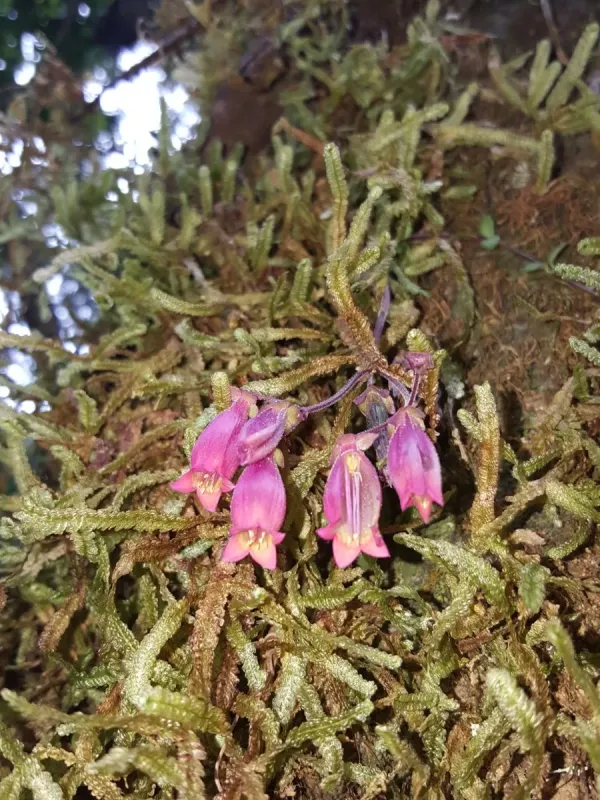
Kalanchoe uniflora is a distinctive succulent species belonging to the Crassulaceae family. Native to Madagascar, it is a trailing plant often appreciated for its delicate, bell-shaped flowers and fleshy, tear-drop-shaped leaves which add aesthetic value to indoor collections.
This species is well-adapted to high-light environments but requires protection from intense, direct midday sun, which can dehydrate its tissues. Ideally, it should be grown in locations with bright, filtered sunlight to maintain its compact growth habit.
The plant thrives in a well-draining succulent-specific potting mix that prevents water retention. An ideal substrate consists of a mixture of coarse sand, perlite, and organic peat or compost, which ensures that roots receive enough oxygen.
Regarding irrigation, it follows the typical regime for drought-tolerant species: watering should be deep but infrequent. The soil must be allowed to dry out significantly between watering sessions to ensure the root system stays healthy and free from rot.
Temperatures should remain relatively stable, ideally between 15°C and 22°C. While the plant can tolerate short periods of heat, it is sensitive to freezing conditions, which can cause permanent damage to its water-storing leaves and thin stems.
Main diseases and pests
Root rot is the most prevalent issue, usually caused by poor drainage or excessive watering. If the base of the plant turns mushy or dark, the plant should be removed from the pot, the affected parts pruned, and repotted in fresh, dry soil.
Mealybugs are common pests that tend to hide in leaf axils. They feed on plant sap and can weaken the plant over time. Regular inspections are necessary to detect these small, white, cotton-like pests before they spread throughout the entire plant.
Spider mites may infest the plant, especially in low-humidity environments. Their presence is usually indicated by fine webbing and stippling on the leaves. Increasing humidity and regular leaf misting or cleaning can act as a natural deterrent.
Aphids can occasionally target new, tender growth during the spring. If an infestation occurs, horticultural oils or insecticidal soaps can be used to treat the plants, ensuring that the entire surface of the foliage is thoroughly covered.
General plant vigor depends on the cleanliness of the growing area. Keeping the environment dust-free and ensuring good air circulation will significantly reduce the likelihood of pest outbreaks and fungal infections during the plant's life cycle.