
Crenate-leaf Kalanchoe
Kalanchoe crenata (Andrews) Haw.
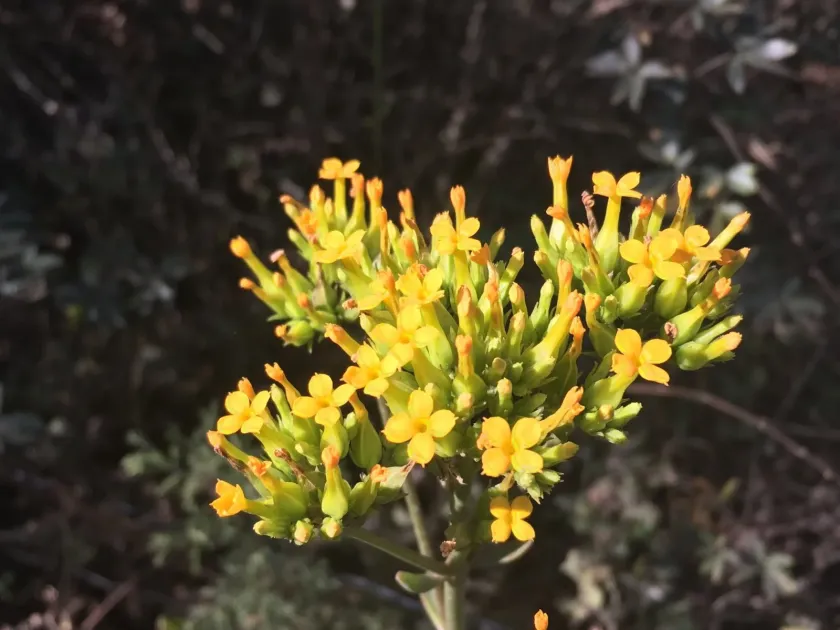
Description
Sowing dates
Propagation of Kalanchoe crenata (Crenate-leaf Kalanchoe) is primarily achieved through seeds in controlled greenhouse environments. The optimal time for sowing is early spring to ensure maximum daylight exposure during the initial growth phase.
Seeds are tiny and should be sown on the surface of a light, well-draining substrate composed of sand and peat. Keeping the environment humid and maintaining temperatures around 20–22 degrees Celsius is crucial for successful germination.
Seedlings are transplanted into individual pots once they reach a sufficient size to handle. Commercial cultivation often employs tray-based systems to facilitate efficient management and later transfer to larger areas.
Vegetative propagation via stem or leaf cuttings is also a highly effective method. Cuttings should be allowed to air-dry slightly before planting to prevent rot and encourage the development of a callus at the cut site.
Proper spacing is vital to allow for adequate airflow and light penetration, which helps in preventing fungal issues and promotes strong, healthy plant architecture.
Growing requirements
Belonging to the Crassulaceae family, Kalanchoe crenata requires intense, indirect light to maintain its health and medicinal potency. Insufficient light often leads to etiolation and a significant drop in its chemical profile.
The plant thrives in light, porous, and well-draining soil mixes. Preventing waterlogging is the most critical aspect of soil management, as the roots are highly susceptible to rot under wet conditions.
Temperatures should be kept between 18 and 28 degrees Celsius. As a tropical plant, it is extremely sensitive to frost and cold drafts; thus, in many temperate regions, it must be grown in greenhouses or as an indoor crop.
Watering should be moderate, allowing the growing medium to dry out partially between applications. Its succulent nature allows it to store water efficiently, making it resilient to brief periods of drought.
Fertilization should be limited to the active growing season, utilizing balanced, low-nitrogen fertilizers formulated for succulents to avoid encouraging excessive, succulent tissue growth that is prone to disease.
Yield
The agricultural production of Kalanchoe crenata is focused on harvesting its biomass, specifically the leaves, which are rich in bioactive compounds used in traditional medicine and pharmaceutical research.
Yield capacity is largely determined by light intensity and the management of environmental stressors. Consistent harvest cycles can be established by carefully monitoring the plant's recovery after foliage removal.
Under optimal conditions, plants can be harvested for several years before needing replacement. Yield is quantified by the total weight of fresh leaves produced per square meter of cultivation area.
Maintaining a stable concentration of active ingredients requires strictly adhering to standard cultivation protocols. Proper post-harvest handling is essential to preserve the integrity of the phytochemicals found in the succulent tissues.
The economic viability of the crop depends on the rapid turnover of biomass and the ability of the plants to regenerate after partial cutting, allowing for multiple harvests per year.
Main diseases and pests
Fungal pathogens, particularly root and leaf rots, represent the most significant threat to the cultivation of Crenate-leaf Kalanchoe, especially in high-humidity or poorly ventilated environments.
Common pests include spider mites and mealybugs, which tend to infest the plant when environmental conditions are too dry. Frequent monitoring is necessary to catch and treat infestations early.
Root rot is typically an indicator of poor soil drainage or excessive watering. Prevention through proper substrate selection and irrigation management is much more effective than chemical treatment.
When pest control is required, biological controls or targeted, mild systemic insecticides are preferred to ensure the final product remains safe for use in medicinal applications.
Hygiene is paramount in the cultivation area to prevent the spread of diseases. Sterilizing tools and maintaining clean working surfaces are essential practices for any serious producer.
Harvesting
Harvesting involves the selective removal of mature, fully developed leaves that show the highest concentration of sap. This is typically done manually to ensure only healthy foliage is selected.
The optimal time for harvesting is during the early morning hours, ensuring the plant has maximum turgidity and the chemical components are most concentrated.
Freshly harvested biomass must be processed or preserved immediately, as the succulent leaves are prone to rapid degradation once removed from the parent plant.
If drying is required, it must be carried out in controlled environments at low temperatures to prevent the thermal breakdown of sensitive bioactive compounds.
Careful planning of the harvest cycle allows for the continuous production of fresh biomass while ensuring the long-term health and vitality of the parent crops.