
Kalanchoe hybrid
hybrids between Kalanchoe miniata Hils. & Bojer ex Tul. And Kalanchoe porphyrocalyx (Baker) Baill.
Description
Growing requirements
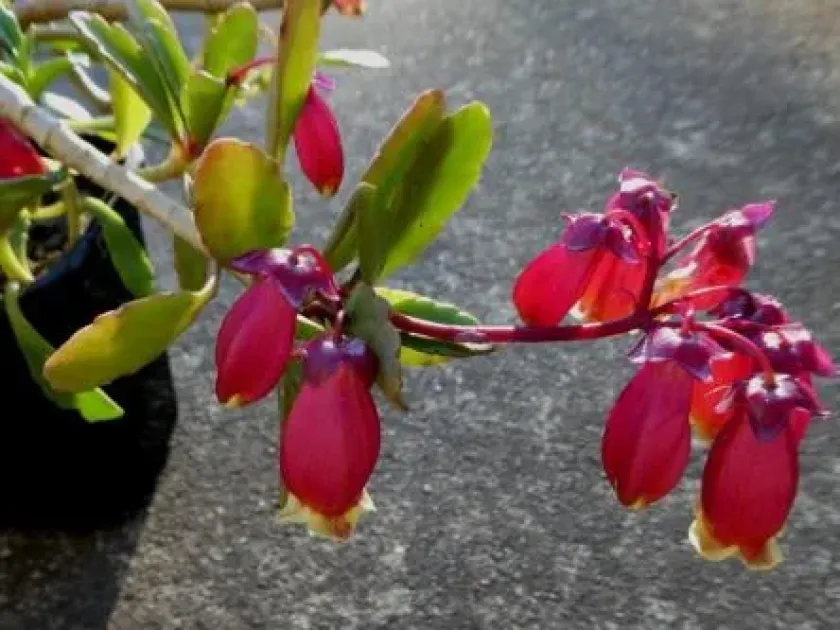
Kalanchoe hybrid (Kalanchoe miniata x Kalanchoe porphyrocalyx) belongs to the Crassulaceae family. This ornamental succulent is valued for its unique flower morphology derived from its Madagascar-native parent species.
The plant requires bright, indirect sunlight for optimal growth. Exposure to harsh, direct sunlight can damage the leaves, while insufficient light leads to etiolation and weak, leggy stems.
A well-draining substrate is critical for this crop. A mix designed for cacti and succulents, containing perlite or volcanic rock, is recommended to ensure proper aeration for the root system.
Watering should be carried out based on the moisture level of the substrate. Allow the soil to dry out significantly between waterings to prevent root rot, which is the most common issue in cultivation.
Temperature management is vital; the plant performs best in a range between 18°C and 24°C. During the vegetative stage, constant airflow helps maintain vigor and promotes healthy foliage development.
Main diseases and pests
Mealybugs are the most common pests found on Kalanchoe hybrids, typically appearing in the leaf axils. They feed on plant sap and secrete a waxy substance that promotes the growth of sooty mold.
Root rot caused by fungi such as Pythium or Phytophthora is a major threat resulting from overwatering. Affected plants usually show signs of wilting even if the soil remains moist.
Aphids can infest the inflorescences during the blooming period. These insects reproduce rapidly, weakening the plant and potentially transmitting viruses that cause leaf distortion.
Powdery mildew often appears as white, dusty spots on the foliage when humidity is high and ventilation is inadequate. It can quickly spread across the entire collection if left untreated.
Effective management includes regular inspection and the use of targeted pesticides or biological controls. Maintaining a dry foliage surface during irrigation is a simple but effective preventive measure.