
Flaming Katy
Kalanchoe blossfeldiana Poelln.
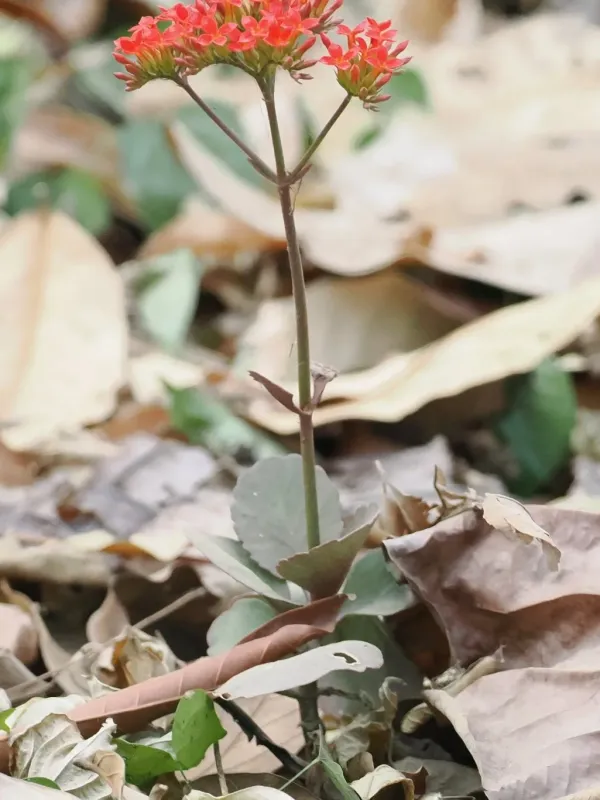
Description
Growing requirements
Kalanchoe blossfeldiana is a succulent plant belonging to the Crassulaceae family, native to the highlands of Madagascar. It has become a significant commercial floral crop globally, valued for its vibrant and long-lasting inflorescences.
The crop requires a well-draining substrate to thrive, typically composed of peat and perlite to ensure aeration and prevent root asphyxiation. Maintaining a soil pH between 6.0 and 6.5 is critical for optimal nutrient availability.
Temperature management is a key agrotechnical aspect; the plant performs best at temperatures between 18 and 24 degrees Celsius. Extreme cold or heat stress will significantly delay flower initiation and decrease the plant's overall quality.
Light intensity and photoperiod are the primary environmental drivers for this species. As a short-day plant, Kalanchoe blossfeldiana requires a strictly controlled dark period to initiate flowering, typically lasting around 14 hours daily for several weeks.
Water management should be precise, following a dry-down cycle to maintain soil moisture without saturation. Over-irrigation is the leading cause of crop failure in commercial greenhouses, leading to rapid deterioration of root health.
Main diseases and pests
Powdery mildew is a prevalent fungal disease that affects Kalanchoe crops, especially in environments with poor air circulation and high humidity levels. Management involves adjusting ventilation and applying targeted systemic fungicides.
Stem and root rots caused by Pythium and Phytophthora pathogens represent a major threat to crop productivity. These diseases are often exacerbated by contaminated irrigation water or infected potting media.
Aphids are the most common insect pests, feeding on the succulent leaves and flower buds, causing deformation and transmitting viral pathogens. Scouting and timely application of insecticidal soaps or systemic pesticides are essential.
The broad mite is a more insidious threat, often causing severe leaf curling and stunted growth. Because these pests are microscopic, early detection is difficult, and rotation of different chemical classes is necessary for control.
- Powdery mildew
- Root rot
- Aphids
- Broad mites
- Stem rot