
Kalanchoe thyrsiflora
Kalanchoe thyrsiflora Harv.
Description
Growing requirements
Kalanchoe thyrsiflora is a striking succulent belonging to the Crassulaceae family. Native to the rocky, arid regions of South Africa, it has evolved to thrive in environments with minimal rainfall and direct, intense sunlight, making it a highly resilient plant for cultivation.
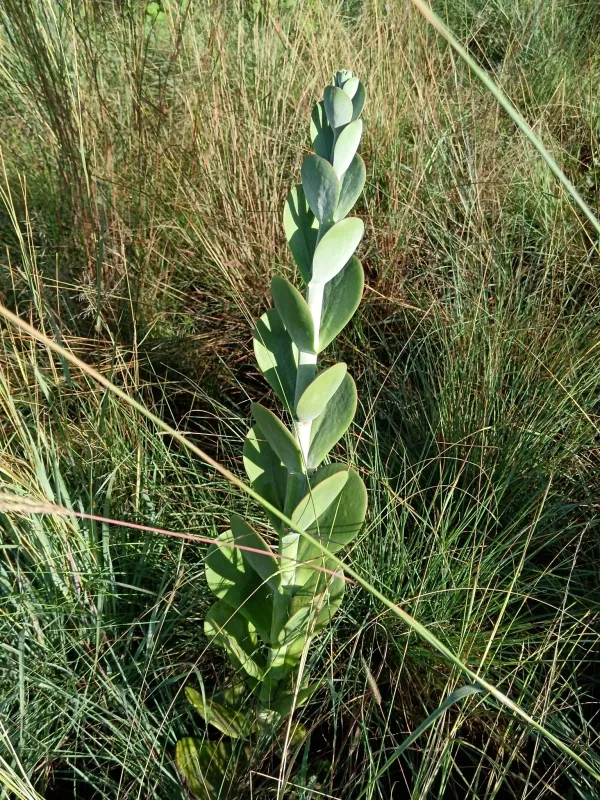
The plant features a distinct basal rosette of large, fleshy, paddle-shaped leaves covered in a powdery, waxy bloom. This bloom serves as a natural sunscreen, reflecting excess heat and minimizing water transpiration. Under high light intensity, the leaf margins turn deep red.
Agricultural success depends on well-draining soil. A mineral-heavy mix, such as a combination of coarse sand, grit, and minimal loam, is essential to mimic its natural rocky habitat. Heavy soils that retain moisture for too long are fatal to the root system of this species.
Climate requirements include high solar exposure and moderate temperatures. While it can withstand extreme heat, it is sensitive to prolonged frost. During the growing season, a temperature range of 20°C to 28°C is ideal for maximizing biomass and maintaining structural integrity.
Irrigation must follow the soak-and-dry method. During winter dormancy, water supply should be drastically reduced to allow the plant to rest. Overwatering is the most common mistake in its cultivation, leading to rapid tissue degradation and rot, even in well-prepared substrates.
Main diseases and pests
The primary threats to Kalanchoe thyrsiflora are pathogens related to high humidity. Root rot and stem rot are the most frequent causes of plant loss, particularly when air circulation is inadequate or the soil drainage is compromised.
Pest pressure mainly comes from mealybugs, which tend to congregate in the tight leaf axils of the rosette. Aphids and scale insects can also occasionally infest the plant, drawing nutrients from the fleshy leaves and causing localized chlorosis and physical damage.
Effective pest management involves using systemic insecticides or insecticidal soaps applied directly to the affected areas. Since the waxy layer on the leaves is sensitive, care must be taken with the application of oils or strong chemical treatments that could disrupt the bloom.
Maintaining a clean cultivation environment is crucial. Removing dead or decaying leaves at the base of the rosette prevents the accumulation of moisture and reduces the breeding grounds for fungal spores and pests.
Regular monitoring for symptoms of fungal infection, such as soft spots or discolored lesions, allows for early intervention. Improving ventilation and strictly controlling the moisture levels in the growing area usually eliminate the need for harsh chemical fungicides.