
Kalanchoe manginii
Kalanchoe manginii Raym.-Hamet & H. Perrier
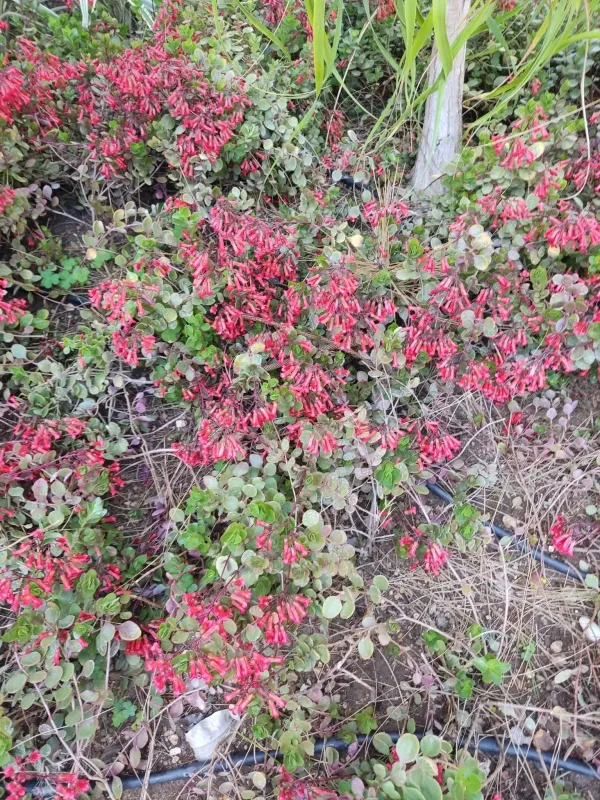
Description
Growing requirements
Kalanchoe manginii is a perennial succulent plant belonging to the Crassulaceae family. It originates from Madagascar, where it evolved to grow in rocky crevices, demonstrating high tolerance for light, well-draining substrates and periods of limited water availability.
This crop requires bright, indirect sunlight for optimal growth. Exposure to intense afternoon sun can scorch the foliage, while insufficient light leads to etiolation, where the stems become weak, elongated, and fail to produce flowers effectively.
Temperature management is crucial for the cultivation of this species. It thrives in temperatures between 18 and 24 degrees Celsius. During the winter season, a cooling period is recommended to encourage the initiation of floral buds for the next season.
The soil substrate must be highly porous and loose. Professional growers typically use a mix of peat moss, perlite, and coarse sand. Adequate drainage holes in pots are mandatory to prevent waterlogging, which is fatal for the root system.
Watering practices should follow the "soak and dry" method. The substrate must dry out almost completely between waterings. Overwatering is the most common cause of crop failure, as it quickly leads to stem and root necrosis.
Main diseases and pests
Fungal infections are the primary threat, often triggered by excessive humidity or poor air circulation. Botrytis and various forms of root rot are frequent problems in greenhouse environments where plants are kept in high-density conditions.
Insect pests such as mealybugs and spider mites pose significant risks. Mealybugs often hide in the leaf axils, sucking sap and weakening the plant, while spider mites thrive in dry air, causing stippling on the leaves and fine webbing.
Integrated Pest Management (IPM) strategies are essential. This includes maintaining proper ventilation, regular monitoring for signs of infestation, and the application of horticultural soaps or systemic insecticides when necessary.
Disease prevention relies heavily on strictly managing moisture levels in the growing medium. If decay is observed, immediate removal of affected tissue and the application of a fungicide are required to save the remaining parts of the plant.
Regarding agricultural use, Kalanchoe manginii is a commercially significant ornamental crop. Its pendulous growth habit and vibrant, bell-shaped flowers make it highly sought after as a hanging basket plant for indoor and patio decoration.