
Kalanchoe humilis
Kalanchoe humilis Britten
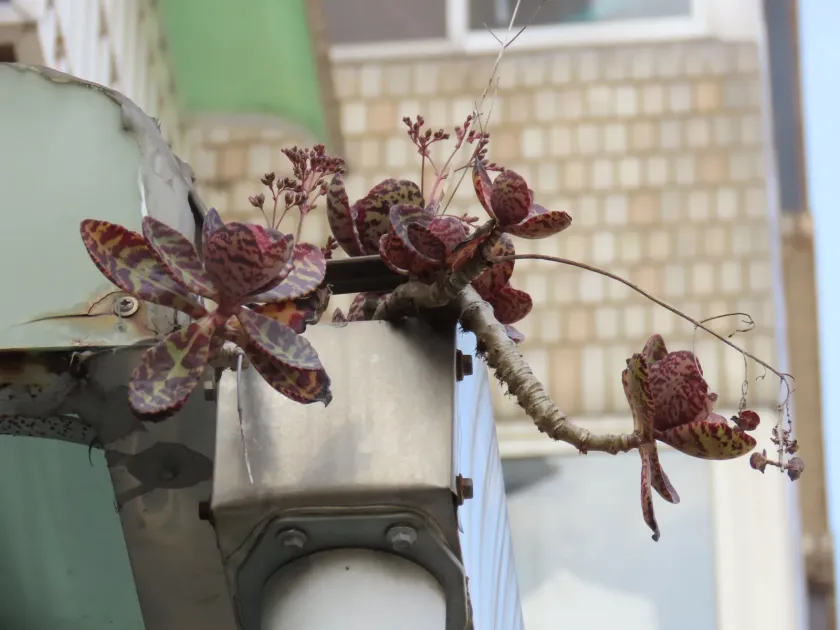
Description
Growing requirements
Kalanchoe humilis is a species of succulent plant from the Crassulaceae family. Originating from the dry rocky habitats of Eastern Africa, this plant has adapted to survive in environments where water is scarce, making it a robust choice for succulent enthusiasts.
The plant is widely recognized for its architecturally interesting leaves, which feature striking purple or brown stripes on a light green background. It typically grows as a compact shrub, making it suitable for both container gardening and rock gardens in frost-free regions.
The primary requirement for successful cultivation is bright, indirect light. While the plant can tolerate some morning sun, intense afternoon direct light can scorch the foliage, leading to unsightly blemishes and dehydration of the leaves.
Soil requirements are strict: the potting medium must be porous, fast-draining, and gritty. A mixture of standard potting soil with inorganic components like pumice or perlite is ideal for preventing water stagnation around the roots.
Temperature control is essential for the plant's seasonal cycle. During the growing season, temperatures between 20°C and 25°C are ideal, while winter months should be cooler, around 12–15°C, to allow the plant to rest properly before the next cycle.
Main diseases and pests
Root rot remains the most significant threat to Kalanchoe humilis, usually caused by overwatering or poor drainage. Once root rot sets in, the plant becomes unstable and loses its vigor, often leading to rapid decline.
Mealybugs are the most common insect pests encountered. These pests thrive in the nooks and crannies of the leaf structure, sucking plant sap and stunting growth. Their presence is usually signaled by white, cotton-like masses on the stems or leaf junctions.
Spider mites can also become a problem, especially if the air humidity is very low. These tiny arachnids create fine webs and cause stippling on the leaves, which significantly reduces the plant's ornamental appeal and overall health.
Effective management includes regular inspection and the use of insecticidal soaps or systemic insecticides when an infestation is detected. Keeping the plant in a well-ventilated area helps to discourage these pests from settling.
Cultural practices, such as allowing the soil to dry out completely between watering sessions, are the best preventive measure. Proper airflow around the plant helps to manage moisture levels and keeps the leaves dry, preventing fungal infections.