
Kalanchoe guignardii
Kalanchoe guignardii Raym.-Hamet & H. Perrier
Description
Growing requirements
Kalanchoe guignardii is a succulent species belonging to the Crassulaceae family. Originally native to the rocky landscapes of Madagascar, it is highly adapted to arid environments and well-drained soil structures.
The plant thrives in bright, indirect light. Placing the succulent near a south-facing window is usually ideal, provided the plant is acclimatized to prevent sunscald on its delicate, fleshy leaves.
A well-draining potting medium is non-negotiable for this species. Use a standard succulent or cactus mix, further amended with inorganic materials such as pumice or coarse grit to ensure that water does not sit around the roots.
Temperature management is key; the plant prefers a range between 18°C and 26°C. During the cooler winter months, the plant enters a period of dormancy, and temperatures can be safely dropped to about 10–12°C to rest the plant.
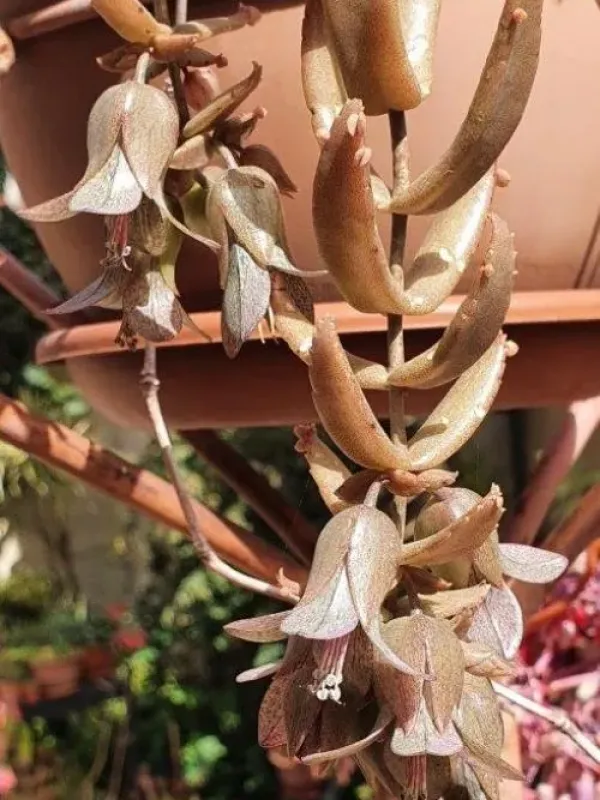
The botanical architecture of this plant is defined by its cylindrical leaf structure and moderate growth rate. Its ability to store moisture makes it a resilient plant for collectors who prefer low-maintenance indoor flora.
Main diseases and pests
The primary threat to Kalanchoe guignardii is overwatering. Excessive moisture leads to root rot, which is often fatal if not diagnosed and corrected through immediate repotting and substrate replacement.
Mealybugs are the most common insect pests that infest the nooks between the leaves. They extract plant sap and weaken the overall structure, often resulting in deformed growth if left unchecked.
Spider mites can also become a problem in environments with low humidity. They typically manifest as tiny webs or speckled leaves, requiring immediate application of miticides or high-pressure water sprays to dislodge them.
Fungal pathogens like Botrytis may occur in environments with poor air circulation and high humidity levels. Maintaining a breeze or using a small fan can significantly reduce the incidence of these diseases.
Effective pest management involves consistent monitoring. By regularly inspecting the undersides of the leaves and the stem base, gardeners can address minor infestations before they escalate into systemic outbreaks.