
Jacquinia keyensis
Jacquinia keyensis
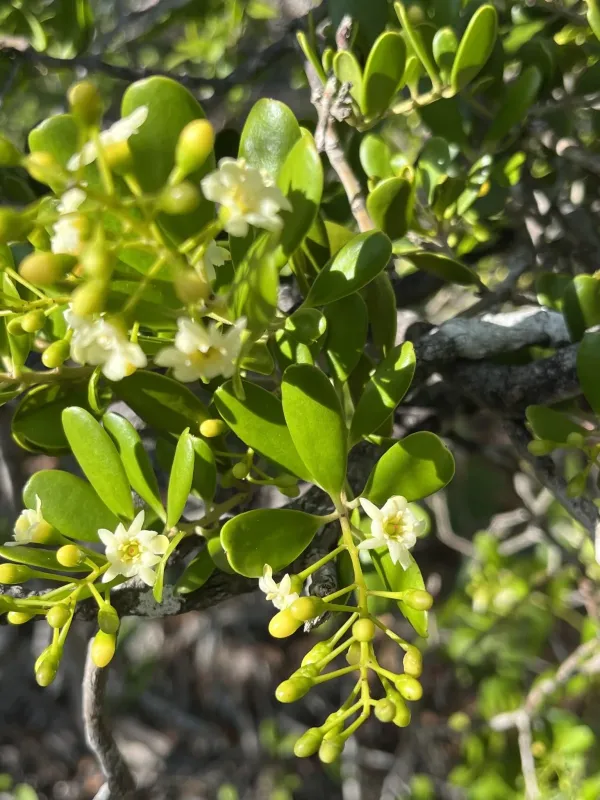
Description
Growing requirements
Jacquinia keyensis, commonly known as joewood, is a member of the Primulaceae family. It is a slow-growing evergreen shrub or small tree native to the coastal habitats of Florida, the Caribbean, and parts of Central America.
The plant thrives in well-draining, calcareous, or sandy soils typical of coastal dunes. Its natural habitat is characterized by harsh conditions, making it an exceptionally hardy species capable of withstanding heavy salt spray and strong coastal winds.
Climatic requirements for Jacquinia keyensis are strictly tropical or subtropical. It demands full sun exposure to maintain its dense foliage and produce its characteristic orange-red, fragrant flowers during the flowering season.
Botanically, the plant is recognized by its rigid, leathery leaves with a distinct waxy cuticle that helps prevent water loss. The flowers are typically arranged in terminal racemes and are highly attractive to local pollinators such as bees and various species of butterflies.
In terms of agricultural and landscaping use, this species is highly valued for coastal restoration projects and as a stable hedging plant. Due to its slow growth and salt tolerance, it is considered a low-maintenance choice for coastal landscaping in warm zones.
Main diseases and pests
The primary threats to Jacquinia keyensis include root rot diseases, which occur if the soil remains waterlogged for extended periods. Proper site selection focusing on well-draining soil is essential to mitigate this risk.
Pests such as scale insects and mealybugs can occasionally infest the stems and undersides of the leaves. Implementing integrated pest management strategies, such as biological control or horticultural oils, is recommended if an infestation occurs.