
Jacquinia armillaris
Jacquinia armillaris
Description
Growing requirements
Jacquinia armillaris is a woody evergreen species belonging to the Primulaceae family. It is native to the Caribbean region, the Florida Keys, and parts of northern South America, typically found in dry coastal thickets and sandy environments.
The plant thrives in well-drained, alkaline, and sandy soils. It is highly tolerant of saline conditions, which makes it an excellent candidate for coastal restoration and xeriscaping projects where other species might fail due to salt spray.
As a tropical plant, it requires full sun exposure to maintain its dense foliage and vigorous growth pattern. It is strictly sensitive to frost, requiring year-round warm temperatures to survive and reproduce effectively in a landscape setting.
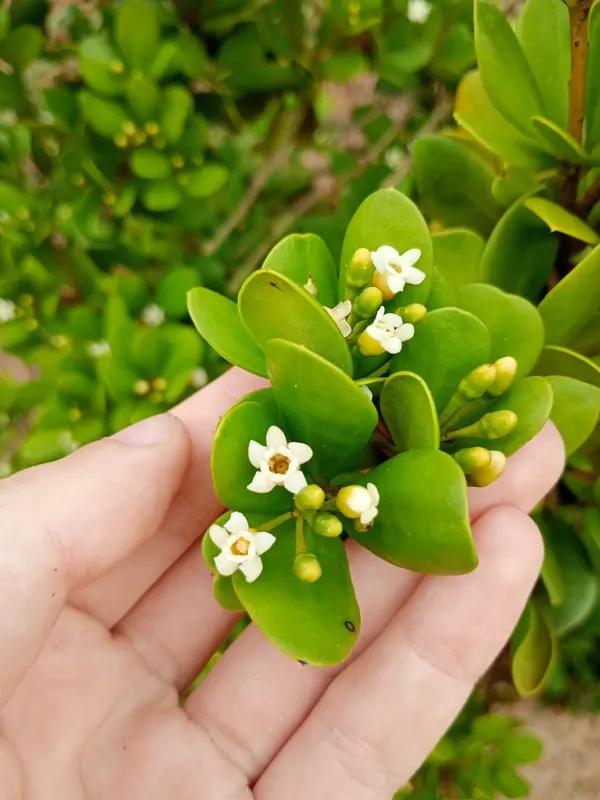
Botanically, it is characterized by stiff, leathery leaves tipped with a sharp spine, which reduces transpiration. The inflorescences produce fragrant, waxy flowers, followed by small, orange-red berries that add significant aesthetic value to the plant.
Cultural care involves providing deep watering during the initial establishment phase. Once the root system is well-developed, the plant shows remarkable drought tolerance and requires little to no maintenance, making it ideal for sustainable landscaping.
Main diseases and pests
Common issues include leaf spot diseases, especially in areas with stagnant air and high humidity. Pests such as scale insects and mealybugs can occasionally infest the stems, particularly in plants stressed by nutrient deficiency or improper drainage.
Harvesting
The primary utility of Jacquinia armillaris is in ornamental and ecological landscaping. It is frequently employed as a hedging plant, windbreak, or as part of coastal vegetation buffers to help stabilize dunes and prevent erosion.