
Jacquinia aristata
Jacquinia aristata
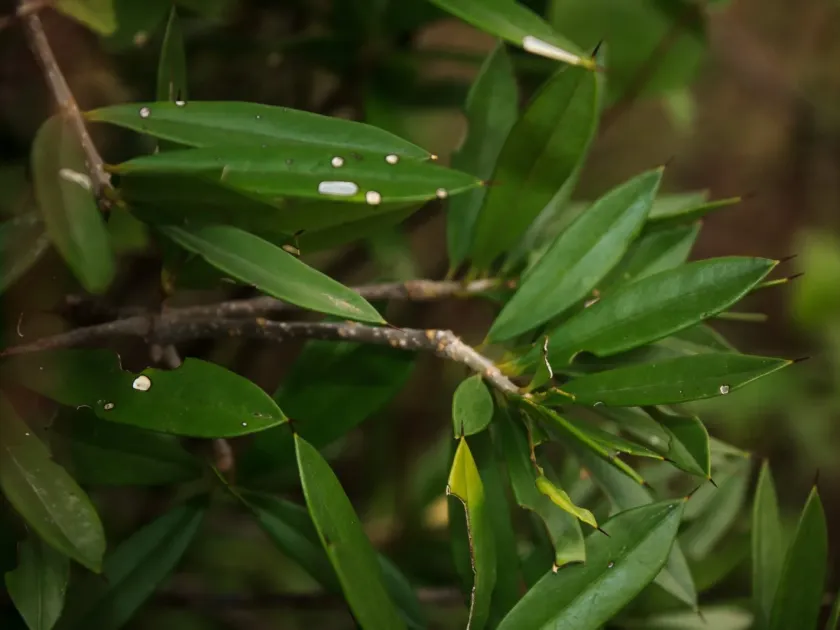
Description
Growing requirements
Jacquinia aristata is an evergreen shrub or small tree belonging to the Primulaceae family. It is native to the tropical landscapes of Central America and various islands within the Caribbean region, where it thrives in warm and stable temperatures.
The plant requires full sun exposure to maintain its dense foliage and to stimulate the production of its characteristic orange-red flowers. While it is naturally resilient, excessive shading can lead to leggy growth and reduced flowering density.
Soil requirements are relatively specific: the plant demands excellent drainage. It performs best in sandy or gravelly soils where water does not accumulate. In container cultivation, a mix designed for drought-tolerant species is highly recommended to prevent root suffocation.
Regarding agrotechnical practices, maintenance is relatively low once the plant is established. Supplemental irrigation is necessary only during prolonged drought spells. Pruning should be carried out after the flowering period to shape the canopy and remove dead wood.
In landscape design, Jacquinia aristata is highly valued for its salt tolerance. This makes it an ideal selection for coastal gardens where other ornamental shrubs might fail due to salt spray or saline soil conditions.
Main diseases and pests
Root rot is the primary physiological threat to Jacquinia aristata, usually triggered by over-irrigation or heavy, clay-based soils. Ensuring a porous substrate and allowing the top layer of soil to dry out between waterings is crucial for prevention.
Insect pests such as scale insects and mealybugs can infest the branches and leaf axils. Periodic inspections are advised, as these pests can cause significant sap loss and promote the growth of sooty mold on the leaves.
Spider mites represent a risk, particularly in environments with low humidity. If an infestation is detected, physical washing of the foliage or the application of specialized acaricides may be required to protect the plant's health.
Fungal leaf spot diseases can occur during prolonged rainy seasons. Adequate plant spacing is necessary to facilitate air circulation, which helps keep the foliage dry and minimizes the conditions favoring pathogen development.
Nutrient imbalances, particularly iron deficiency, can manifest as interveinal chlorosis. Regular application of chelated iron supplements or balanced slow-release fertilizers helps keep the leaves deep green and vibrant throughout the growing season.