
Long-stalk holly
Ilex pedunculosa Miq.
Description
Growing requirements
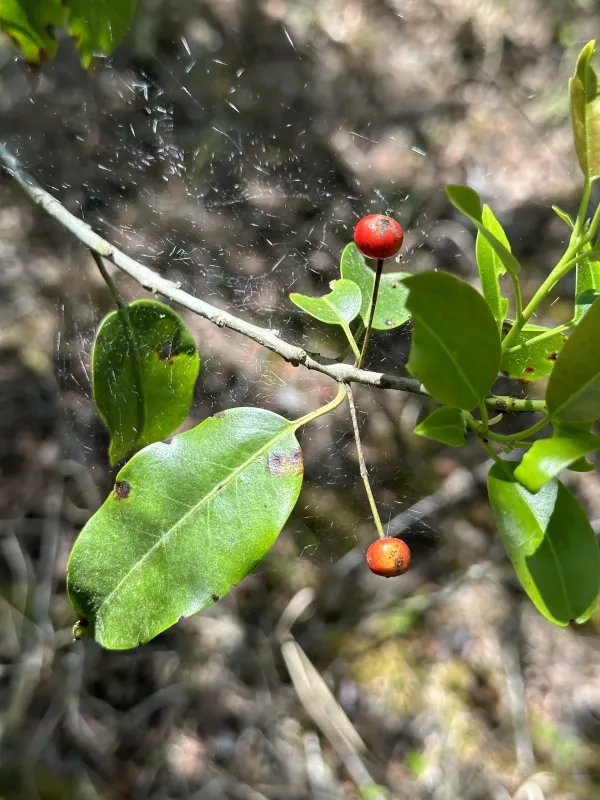
The long-stalk holly (Ilex pedunculosa) is an evergreen species belonging to the Aquifoliaceae family. Native to the forests of China, Taiwan, and Japan, it is highly regarded for its smooth, entire-margined leaves and distinctive red fruits hanging on long peduncles, which give the plant its common name.
This species thrives in partially shaded environments with rich, well-drained, acidic soil. Unlike many other holly varieties, it prefers consistent moisture levels and protection from direct harsh sunlight, which can lead to leaf scorch in exposed locations.
Regarding climate requirements, the long-stalk holly is noted for its relative hardiness. It can withstand moderate frost, but it performs best in sheltered garden spots where it is protected from desiccating winter winds. Mulching is essential to maintain root stability and moisture during temperature fluctuations.
Agronomic management involves minimal intervention due to its slow growth habit. However, proper care includes providing supplemental water during prolonged summer droughts and ensuring that the soil remains slightly acidic. Pruning should be kept to a minimum, focusing only on removing dead or crossing branches.
The primary use of Ilex pedunculosa is ornamental. It is a prized specimen for temperate gardens, used in foundation plantings, as a specimen shrub, or as part of mixed borders. Its visual appeal increases in late autumn and winter when the bright red drupes are prominently displayed.
Main diseases and pests
Disease pressure on this species often stems from poor drainage, which can lead to Phytophthora root rot. Ensuring the planting site has excellent soil structure is the best prophylactic measure against these soil-borne pathogens that thrive in waterlogged conditions.
Scale insects are a common pest problem for this holly. They tend to cluster on the underside of leaves and stems, sucking the sap and causing the plant to lose vitality. If left untreated, the accumulation of honeydew can lead to secondary sooty mold infections.
Spider mites represent another common threat, particularly in warm, dry weather. These small pests cause leaf stippling and discolouration, which significantly diminishes the aesthetic quality of the evergreen foliage. Regular misting or the use of horticultural oils can help manage their populations.
Leaf spot diseases, caused by various fungal pathogens, can occur during periods of prolonged high humidity. Improving air circulation around the canopy through proper spacing and occasional thinning of branches can significantly reduce the incidence of these fungal infections.
Aphids may colonize the tender new growth during the spring, leading to leaf curling. While usually not fatal to mature plants, heavy infestations can stunt growth and require integrated pest management strategies to protect the overall health and ornamental value of the specimen.