
Winterberry
Ilex verticillata (L.) A. Gray
Description
Sowing dates
Propagation of Ilex verticillata is most effectively achieved through softwood cuttings taken in mid-summer, as this method ensures the genetic uniformity of the offspring and faster establishment compared to seeds.
Seed germination is a complex and lengthy process involving stratification that can last up to 18 months, making it less practical for amateur gardeners but essential for breeding programs.
When sowing seeds, it is critical to maintain constant moisture levels and use an acidic, well-draining medium, while protecting the pots from direct harsh sunlight to prevent the soil from drying out too quickly.
Transplanting young plants to their permanent location is best performed in early spring or autumn when the ambient temperatures are moderate, allowing the root system to adapt before extreme weather occurs.
To ensure fruit production, both male and female plants must be planted in proximity. A common practice is to maintain a ratio of at least one male pollinator for every five female plants to guarantee successful fertilization.
Growing requirements
Winterberry (Ilex verticillata) is a deciduous holly belonging to the Aquifoliaceae family, native to wetland habitats of eastern North America where it thrives in moist, acidic soil conditions.
The plant requires acidic soil with a pH between 4.5 and 6.5; higher pH levels often lead to iron chlorosis, causing yellowing leaves and stunted growth, which necessitates the use of soil acidifiers.
While winterberry can tolerate partial shade, it produces the most profuse berry display when grown in full sun, provided that the soil moisture is kept consistent throughout the growing season.
It is highly adaptable to wet sites, making it an excellent candidate for rain gardens or areas with poor drainage where other ornamental shrubs might struggle to survive.
Mulching the root zone with pine needles or bark helps to retain soil moisture, suppress weeds, and slowly increase the acidity of the soil over time, supporting the long-term health of the shrub.
Main diseases and pests
Although generally robust, winterberry can occasionally be plagued by common pests such as aphids, scale insects, and spider mites, particularly when the plants are stressed by inadequate watering.
Powdery mildew is a frequent fungal threat in humid environments with poor air circulation, manifesting as a white dusty coating on the foliage that can prematurely weaken the plant.
Root rot is a significant concern if the soil does not provide sufficient oxygen exchange, even though the plant prefers moisture; avoiding prolonged standing water is essential for disease prevention.
Leaf spot diseases can also occur, and while usually cosmetic, they should be managed by removing affected leaves and ensuring the planting site allows for proper drying of the foliage.
- Monitor for early signs of insect infestation.
- Prune to improve airflow within the canopy.
- Apply preventative fungicide if humidity levels remain high.
Harvesting
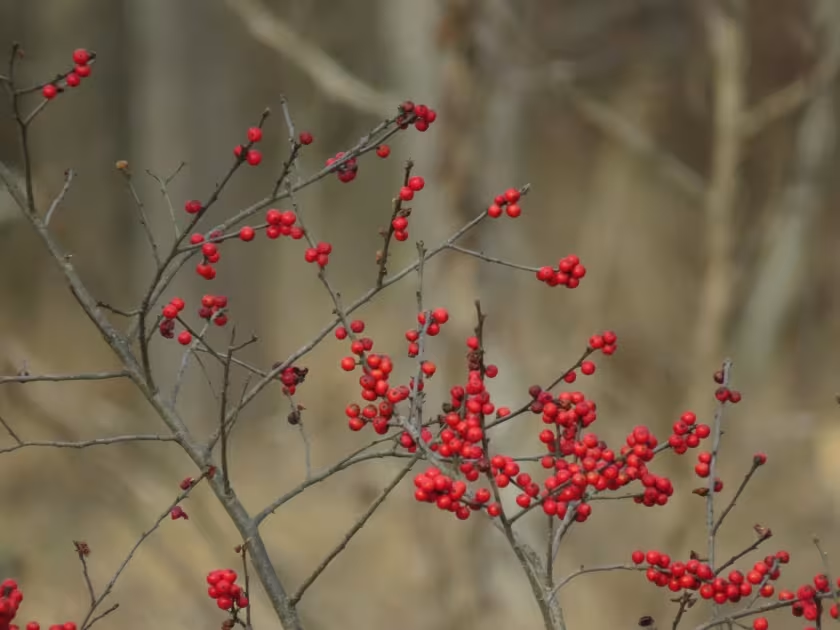
Winterberry is primarily cultivated for its exceptional ornamental value, as the bright red berries remain on the branches throughout the winter, providing striking color against the grey winter landscape.
Harvesting for floral design is typically carried out after the first hard frost, which induces leaf drop and highlights the clusters of berries that are so highly prized for holiday decorations.
In addition to decorative use, the shrub provides a vital food source for winter birds, including robins and bluebirds, which rely on the berries for survival during food shortages.
Commercial production is concentrated on supplying florists with high-quality, berry-laden stems during the festive season, requiring careful management of plant nutrition and pruning to maximize yields.
When harvesting from your own landscape, always ensure that only a portion of the branches are removed, allowing the plant to maintain sufficient foliage during the next season to produce energy for fruit set.