
Yerba mate
Ilex paraguariensis A. St.-Hil.
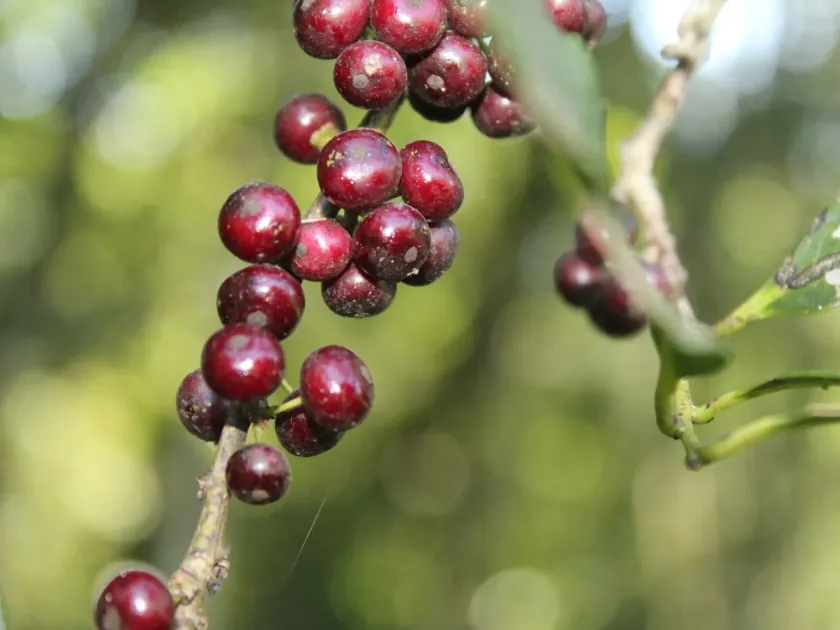
Description
Sowing dates
The propagation of Yerba mate (Ilex paraguariensis), a member of the Aquifoliaceae family, is typically achieved through seeds or stem cuttings. Seeds have a natural dormancy period and require a stratification process to improve germination rates.
Nurseries employ loose, well-draining substrates rich in organic matter to foster strong seedling development during the sensitive early growth phases.
Transplanting into the permanent field is best executed at the onset of the rainy season to ensure the plants establish their root systems before dry weather arrives.
Young plants are highly sensitive to intense solar radiation and require partial shade, often provided by intercropping or specific shading structures in the first years.
Planting density is carefully managed to allow for agricultural machinery to operate efficiently while ensuring enough space for the trees to develop their leafy canopy.
Growing requirements
As a native species of South American subtropical forests, Yerba mate thrives in regions with high precipitation, ideally exceeding 1500 mm annually, to support its dense foliage.
The plant requires acidic soils (pH 4.5–6.0) with excellent drainage; waterlogging can be fatal to the root system, causing rapid decline and plant death.
Yerba mate prefers dappled light or semi-shaded environments, which mimic the conditions found in the lower strata of its native forest habitat.
The ideal temperature range for active vegetative growth is between 18 and 25 degrees Celsius, and the plant is susceptible to cold stress during extreme winters.
Consistent nitrogen application is vital to maximize the production of new leaves, which are the primary economic component of this agricultural crop.
Yield
Yields of Yerba mate are contingent upon the age of the plantation and the implementation of rigorous pruning schedules designed to stimulate bushy growth.
Commercial harvesting typically begins when the trees reach 4 to 5 years of age, marking the start of a productive cycle that can last for several decades.
The harvest consists of collecting both leaves and small twigs, which are then processed together to create the final commercial product known as mate tea.
Modern intensive agricultural practices, such as precision irrigation and controlled fertilization, have significantly boosted productivity per hectare in commercial plantations.
The global demand for mate as a stimulating, antioxidant-rich beverage ensures its role as a stable and economically significant crop in South American agriculture.
Main diseases and pests
Fungal diseases represent the most significant threat to Yerba mate crops, particularly in poorly ventilated plantations where humidity levels remain excessively high.
Insect pests can severely impact the leaf surface area, leading to significant yield losses and lower quality of the processed tea leaves.
Proactive management of plantation health includes regular sanitary pruning and monitoring, which helps maintain airflow and reduces the risk of infection.
Integrated pest management strategies are prioritized to minimize the use of synthetic pesticides, ensuring the final product remains safe and environmentally friendly.
- Leaf anthracnose
- Root rot
- Leaf-eating caterpillars
- Mite infestations
Harvesting
Harvesting is performed either manually with specialized tools or mechanically, depending on the topography and the scale of the plantation operations.
A rotational harvest schedule is essential, where specific sections of the plantation are harvested every two years to allow the trees time to recover and regrow.
The immediate post-harvest phase involves high-temperature thermal treatment to deactivate enzymes in the leaves, which prevents spoilage and preserves green color.
After the initial heat treatment, the raw material undergoes a drying and milling process followed by a maturation period, which is crucial for flavor development.
Careful attention during the harvest process is critical to ensure that the main branches are not damaged, thereby securing the long-term viability of the plantation.